
Sight is the sense people fear losing most, and it is also the one modern surgery restores best. Eye treatment in Delhi NCR ranges from a fifteen minute cataract operation to corneal transplant, at a fraction of the cost abroad.
Share your eye reports & get a free expert opinion + cost estimate within 24 hours.
Eye treatment in Delhi NCR covers corneal transplant, cataract surgery, glaucoma surgery, squint surgery, retina treatments, and LASIK surgery. Nobel Medi Assistance connects you with the leading eye hospitals in Delhi NCR at JCI and NABH accredited centres, arranges a free second opinion and a written cost estimate, and supports Indian and international patients end to end. Cataract surgery starts from around ₹25,000 and LASIK from around ₹40,000 for both eyes. For a free case review, contact our team.
Ophthalmology is unusual among specialties in one respect: almost everything is day care. You walk into an eye hospital in Delhi NCR in the morning and walk out the same afternoon, often with better vision than you have had in years. Cataract surgery takes about fifteen minutes. LASIK takes ten. Even a corneal transplant is usually a single overnight stay. That is why eye treatment in Delhi NCR works so well for international patients: a short trip, a small operation, and a result you notice immediately. This guide covers corneal transplant, cataract surgery, glaucoma surgery, squint surgery, retina treatments, and LASIK surgery in Delhi NCR, what each involves, indicative costs, the leading eye hospitals in Delhi NCR, how to choose a surgeon, and how Nobel Medi Assistance plans the journey for you.
Enormous surgical volume, the newest lasers, and day care that fits a short trip.
India performs several million cataract operations a year. A senior surgeon at an eye hospital in Delhi NCR may have done twenty thousand. In eye surgery, that repetition is exactly what you want.
Cataract surgery takes about fifteen minutes and LASIK about ten, both under drops rather than general anaesthetic. Most eye treatment in Delhi NCR needs no hospital stay at all.
LASIK for both eyes in Delhi NCR costs less than a single eye in most Western countries, using the same femtosecond platforms and the same lenses.
Start with volume, because in eye surgery it matters more than in almost any other field. India performs several million cataract operations every year, more than any country on earth, and that scale means a senior cataract surgeon at an eye hospital in Delhi NCR may have performed twenty thousand cases. These are short, highly repetitive operations where the surgeon's hands know the steps cold, and the outcome data reflects it. The same is true of LASIK, where Delhi NCR centres run femtosecond, Contoura, and SMILE platforms at volumes that Western clinics rarely reach.
The second reason is that ophthalmology fits medical travel better than any other specialty. Almost nothing here needs a general anaesthetic or a hospital bed. Cataract surgery is fifteen minutes under anaesthetic drops, LASIK is about ten, and both send you home the same day. Even a corneal transplant is typically one overnight stay. A patient can fly in, be assessed, be operated on, and have their first follow-up within a week or two, which makes eye treatment in Delhi NCR practical in a way that a cardiac or transplant journey never is.
Cost is the third reason, and in refractive surgery it is decisive. LASIK for both eyes in Delhi NCR costs less than a single eye typically costs in the UK, US, or Gulf, on the same equipment. Premium multifocal lenses that are an expensive upgrade elsewhere are within reach here. The saving is not a compromise on the implant or the laser, it is the underlying cost base. Nobel Medi Assistance never marks up hospital pricing, and we arrange visa support, interpreters, and accommodation for international patients. See a real outcome in our glaucoma treatment success story from an Iraqi patient.
Corneal transplant, cataract surgery, glaucoma surgery, squint surgery, retina treatments, and LASIK surgery make up most eye treatment in Delhi NCR.
The cornea is the clear window at the front of the eye, and when it clouds or warps, no glasses or lenses can fix it, because the problem is the window itself rather than the focus. A corneal transplant, properly called keratoplasty, replaces that window with donor tissue. What most people do not realise is that this is not the all-or-nothing operation it used to be. Full thickness penetrating keratoplasty replaces every layer and is still needed for deep scarring, but it heals slowly, over a year or more, and carries the highest rejection risk. The modern approach is to replace only the diseased layer. DALK keeps the patient's own inner layer and replaces the front, which is ideal for keratoconus. DSEK and DMEK do the opposite, replacing only the innermost endothelial layer through a tiny incision, which is what Fuchs' dystrophy and post-cataract corneal swelling need, and recovery is measured in weeks rather than years with a much lower rejection rate. The commonest reasons for corneal transplant are keratoconus, where the cornea bulges into a cone, corneal scarring from infection or injury, and endothelial failure. Rejection is the risk to understand: it can happen years later, and the warning signs of pain, redness, light sensitivity, or dropping vision need same-day attention, which is why long-term follow-up is not optional. India has well-established eye banks, so waiting times are short compared with many countries. See corneal transplant and keratoplasty in India and our organ transplant page.
A cataract is simply the eye's natural lens turning cloudy with age, and cataract surgery is the most commonly performed operation in the world for a good reason: it works, almost always, and it takes about fifteen minutes. Phacoemulsification uses ultrasound to break up the cloudy lens through an incision so small it usually needs no stitch, and an artificial intraocular lens goes in to replace it. You are awake, under anaesthetic drops, and home the same day. The part worth thinking about is not the surgery but the lens, because that choice is permanent and it is where the cost varies. A monofocal lens gives excellent distance vision but you will still need reading glasses, and it is the affordable, reliable default that most people are perfectly happy with. A toric lens corrects astigmatism at the same time. A multifocal or extended depth of focus lens aims to free you from glasses altogether, which is genuinely liberating for some people, though a minority notice haloes around lights at night, and any surgeon who does not mention that is overselling. Femtosecond laser assisted cataract surgery automates some steps and costs more, and the honest position is that outcomes are broadly comparable to skilled manual phaco in routine cases. Cataract surgery in Delhi NCR is done in enormous volume by surgeons with tens of thousands of cases behind them, which is exactly the experience you want for a fifteen minute operation on your eye.
Glaucoma is called the silent thief of sight and the name is precise. Pressure inside the eye damages the optic nerve slowly, from the edges of your vision inward, and because the brain fills in the gaps you notice nothing until a great deal is already gone. Here is the hard truth that matters more than anything else on this page: vision lost to glaucoma never comes back. Treatment does not restore sight, it protects what remains. That single fact is why screening after forty, and earlier with a family history, is worth far more than any surgery. Treatment escalates. Pressure-lowering drops come first and control most cases, provided they are actually used every day, which is where many patients quietly fail. SLT laser is a simple outpatient procedure that can reduce or replace drops. When those are not enough, trabeculectomy creates a new drainage channel and remains the workhorse operation. Drainage implants such as an Ahmed or Baerveldt valve suit complex or repeat cases. MIGS, minimally invasive glaucoma surgery, uses tiny stents and is gentler, often combined with cataract surgery, though it lowers pressure less. Angle closure glaucoma is different and urgent: a painful red eye with blurred vision and vomiting is an emergency, treated with a quick laser iridotomy. Glaucoma surgery in Delhi NCR is available across our network, and you can read about a successful glaucoma treatment for an Iraqi patient.
Squint, or strabismus, is when the eyes do not point in the same direction, and it is widely misunderstood as a cosmetic problem. In children it is not. A child whose eye turns will start ignoring the image from that eye to avoid double vision, and if that goes on past roughly the age of seven or eight, the brain stops developing that eye's pathway permanently. That is amblyopia, or lazy eye, and it cannot be fixed later. So the single most important thing about childhood squint is that it is treated early, and any advice to wait and see whether a child grows out of a persistent turn should be questioned. Treatment starts with glasses, because many squints are driven purely by uncorrected long-sightedness and disappear once that is fixed. Patching the good eye forces the weaker one to work. Surgery adjusts the tension of the muscles around the eye, tightening or loosening them to realign, and it is day care, usually under general anaesthetic in children and often under local in adults. In adults a squint may appear after a nerve palsy, thyroid eye disease, or injury, and here the complaint is usually double vision rather than appearance, and surgery genuinely restores function. The cosmetic benefit in adults is real too, and worth saying plainly: for someone who has lived with a visible turn since childhood, correcting it changes how they are met by other people. Squint surgery in Delhi NCR is available for both children and adults across our network.
The retina is the film at the back of the eye, and unlike the cornea or the lens it cannot simply be swapped out, which is why retinal disease is where sight is genuinely lost and why early treatment matters so much. Diabetic retinopathy is the biggest problem India faces here, and it is largely silent until late, so anyone with diabetes needs an annual dilated retinal exam regardless of how well they see. Treatment includes laser photocoagulation, anti-VEGF injections into the eye, and vitrectomy for advanced bleeding or traction. Age-related macular degeneration attacks central vision, and the wet form responds well to anti-VEGF injections given repeatedly, which is a commitment rather than a cure. Retinal detachment is a true emergency: sudden floaters, flashes of light, or a curtain coming across your vision means you need a retinal surgeon that day, not next week, because a detachment that reaches the macula loses vision that surgery often cannot fully recover. It is repaired with vitrectomy, a scleral buckle, or pneumatic retinopexy. Macular hole and epiretinal membrane are repaired with vitrectomy and fine peeling. Retinopathy of prematurity affects premature babies and needs screening on a strict timetable. Retina treatments in Delhi NCR are delivered with OCT imaging, wide-field angiography, and modern small-gauge vitrectomy, and this is the one area of eye care where getting seen quickly changes the outcome more than anything else.
LASIK reshapes the cornea with a laser so that light focuses properly, and for the right candidate it is close to miraculous: ten minutes, no stitches, and you see clearly the next morning after decades of glasses. The candidacy assessment is the whole game, and a clinic that skips it is one to walk away from. You need a stable prescription for at least a year, adequate corneal thickness, no keratoconus, healthy eyes, and to be over eighteen, ideally in your twenties or later. There are several versions worth knowing apart. Standard LASIK creates a flap and reshapes underneath. Femto LASIK makes that flap with a laser rather than a blade. Contoura and topography-guided LASIK map thousands of points on your cornea and treat the individual irregularities, which is why it often gives sharper vision than glasses ever did. SMILE is flapless, working through a tiny incision, which suits dry eyes and active lifestyles. PRK and Trans-PRK remove the surface layer instead of making a flap, and are the answer for thin corneas, though recovery is several days of real discomfort rather than one. ICL, an implantable lens, is the option when the cornea is too thin or the prescription too high for laser at all, and it is reversible. The honest caveats: LASIK does not stop presbyopia, so you will still need reading glasses in your forties, and temporary dry eyes and night haloes are common for a few months. LASIK surgery in Delhi NCR costs less for both eyes than one eye does in most Western countries.
Beyond these six, our network covers the full breadth of ophthalmology in Delhi NCR, including keratoconus and corneal cross-linking, oculoplasty and eyelid surgery, dry eye treatment, uveitis, neuro-ophthalmology, paediatric ophthalmology, and ocular trauma.
The eye hospitals in Delhi NCR we work with manage the full spectrum of ophthalmic conditions.
In cataract and LASIK, the lens or the laser you choose moves the price far more than the hospital does.
The figures below are indicative ranges for corneal transplant, cataract surgery, glaucoma surgery, squint surgery, retina treatments, and LASIK surgery in Delhi NCR, to help you plan rather than fixed quotes. Eye treatment in Delhi NCR is among the most affordable of any specialty, and Nobel Medi Assistance provides a personalised, itemised estimate once we review your reports.
| Eye Procedure in Delhi NCR | Indicative Cost (INR) | Indicative Cost (USD) | Stay |
|---|---|---|---|
| Cataract Surgery (monofocal lens, per eye) | ₹25,000 to ₹55,000 | $300 to $700 | Day care |
| Cataract Surgery (multifocal / premium lens, per eye) | ₹60,000 to ₹1,30,000 | $750 to $1,600 | Day care |
| LASIK (both eyes, standard) | ₹40,000 to ₹80,000 | $500 to $1,000 | Day care |
| Contoura / SMILE (both eyes) | ₹80,000 to ₹1,50,000 | $1,000 to $1,900 | Day care |
| ICL Implant (both eyes) | ₹1,50,000 to ₹2,20,000 | $1,900 to $2,750 | Day care |
| Corneal Transplant (per eye) | ₹60,000 to ₹1,50,000 | $750 to $1,900 | Day care to 1 day |
| Glaucoma Surgery (trabeculectomy / implant) | ₹50,000 to ₹1,20,000 | $620 to $1,500 | Day care to 1 day |
| Squint Surgery | ₹45,000 to ₹90,000 | $560 to $1,100 | Day care |
| Retina Surgery (vitrectomy) | ₹55,000 to ₹1,30,000 | $700 to $1,600 | Day care to 1 day |
| Anti-VEGF Injection (per dose) | ₹12,000 to ₹40,000 | $150 to $500 | Outpatient |
Note: Costs are approximate and change with hospital, surgeon, and the lens, laser, or implant chosen. In cataract surgery the intraocular lens is the main variable. In LASIK the technology is. Retina injections such as anti-VEGF are often needed repeatedly, so budget per course rather than per dose. Ask us for a written estimate before you decide.
Two things are worth understanding before you compare quotes. First, in both cataract and LASIK, the headline price usually reflects the most basic option, and the real cost depends on the choice inside it: a premium multifocal lens or a Contoura laser costs more, and a quote that looks unusually low is almost always the entry-level version. Ask exactly which lens or which laser is included. Second, some conditions are ongoing rather than one-off. Wet macular degeneration and diabetic retinopathy often need repeated anti-VEGF injections, so the meaningful figure is the annual course, not the single dose. Most Indian health insurance covers cataract, glaucoma, retina, and corneal surgery, while LASIK and other refractive procedures are treated as elective and are not covered. International patients pay through transparent packages, and because most eye treatment in Delhi NCR is day care, there are rarely large hospital-stay costs on top. Nobel Medi Assistance never marks up hospital pricing. Ask us for a written estimate →
Empanelled with the leading ophthalmology departments and dedicated eye centres across Delhi NCR, matched to your case, not the most expensive option.
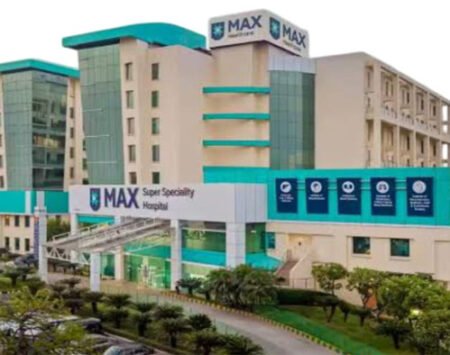
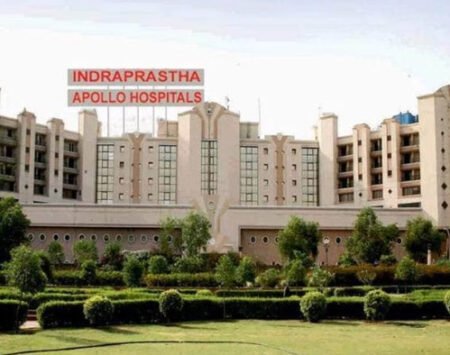
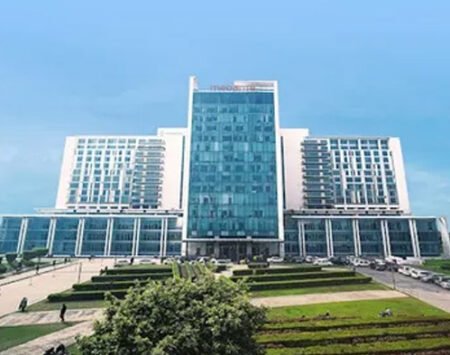
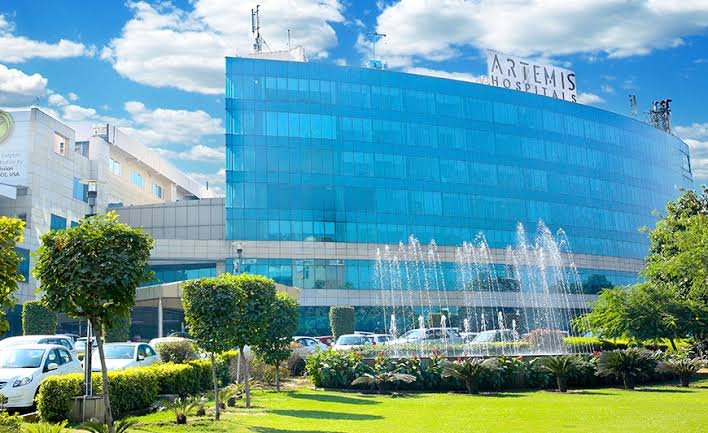
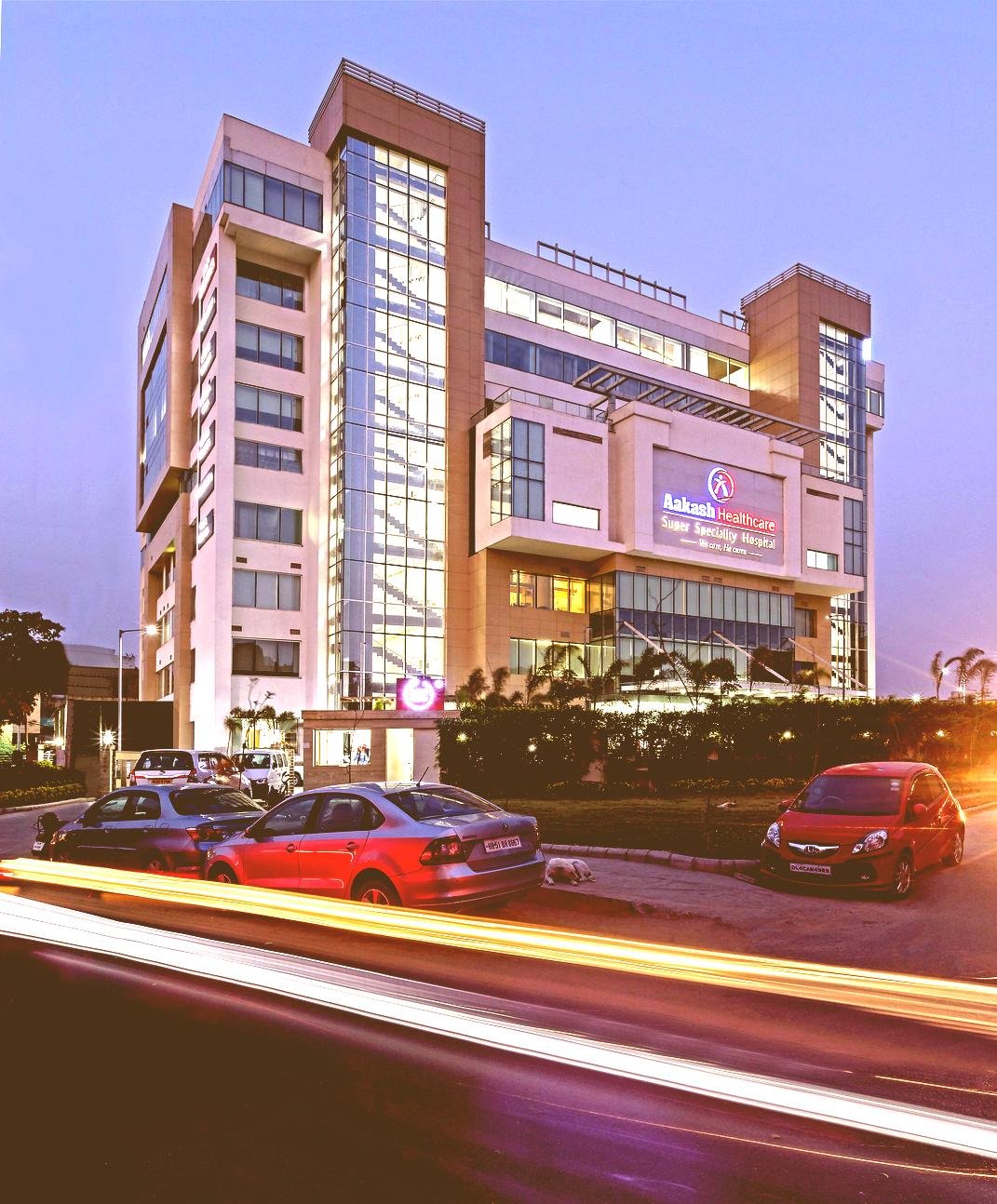
The strength of eye treatment in Delhi NCR rests on these hospitals and their ophthalmology teams. Nobel Medi Assistance is empanelled with the leading eye hospitals in Delhi NCR, so we can match your case to the right centre rather than the priciest one. Between them they cover phacoemulsification cataract surgery with premium lenses, femtosecond, Contoura, and SMILE laser vision correction, all forms of corneal transplant backed by eye banks, glaucoma medical and surgical care including MIGS, adult and paediatric squint surgery, and a full retina service with OCT, angiography, and vitrectomy. One point is worth making: for routine cataract and LASIK, a dedicated high-volume eye hospital in Delhi NCR is often the ideal setting, while complex retina, corneal, or multi-system cases benefit from a large multispecialty hospital where other departments are on hand. We help you pick the right kind of centre for your specific problem, and we can also connect you with dedicated eye institutes beyond this list where a case calls for it.
Eye surgery is subspecialised. The single best question you can ask is whether the surgeon does your exact procedure all day, every day.
Ophthalmology looks like one field from outside, but inside it is many. The surgeon who is brilliant at LASIK is often not the one who repairs a detached retina, and the cornea specialist who does transplants is not usually the one operating on a child's squint. For most eye treatment in Delhi NCR the outcome depends less on the hospital's name and more on matching you to a surgeon who does your specific procedure in high volume. Rather than publish a list of names we cannot yet verify with certainty, we would rather do the matching properly for your individual case. Here is what we look for on your behalf, and what you should look for too.
Cornea, cataract and refractive, glaucoma, retina, squint and paediatric, and oculoplasty are separate worlds. We match your condition to a surgeon who focuses on exactly that, not a generalist.
For cataract and LASIK, ask how many the surgeon performs a month. For a corneal transplant or a retinal detachment, ask how many a year and with what results. High volume in your specific operation is the strongest signal there is.
Contoura and SMILE for LASIK, DMEK for the right corneal cases, MIGS for glaucoma, small-gauge vitrectomy for retina. We confirm the centre actually offers the technique your case calls for.
The best surgeons turn people away. A LASIK surgeon who declines a thin or unstable cornea, or an ophthalmologist who says your cataract can wait, is protecting you. We value that candour and look for it.
Tell us your diagnosis and send your reports, and we will match you to the right ophthalmologist and the right eye hospital in Delhi NCR for your specific case, with a free second opinion at no cost. Send us your reports to start, in complete confidence.
Plenty of companies promise to arrange treatment. What sets us apart for eye treatment in Delhi NCR is the depth of support and a track record you can check.
Matched to the subspecialist who does your exact procedure
Partner hospitals, matched to your case not the priciest
Free second opinion before you commit to surgery
Visa invitation, interpreters, stay, and follow-up after you fly home
Lens and laser choice named upfront, no hidden fees
See real outcomes and stories on our patient testimonials page, including a successful glaucoma treatment for an Iraqi patient, and learn more about us.
Arranging eye treatment in Delhi NCR is simpler than most specialties, because almost everything is day care. As a medical assistance company based in Delhi, we manage the whole path:
Share your eye reports, prescription, or retinal images and we get a senior ophthalmologist's opinion within 48 hours.
You receive a clear, itemised estimate with the lens, laser, or graft named, across matched centres.
For international patients, we assist with the medical visa invitation, flights, and a short stay near the hospital.
Airport pickup, a pre-operative assessment, and most procedures done as same-day day care.
Post-operative checks, and teleconsults after you fly home, with fit-to-fly confirmed first.
Because most eye treatment in Delhi NCR is day care, the whole journey is short, often a week or two including assessment, surgery, and first follow-up, which makes it one of the most practical specialties to travel for.
The workup is quick but decisive, and in eye surgery the measurements are the operation half done. Everyone starts with a visual acuity test, a slit lamp examination of the front of the eye, and intraocular pressure. Beyond that it is procedure-specific. Cataract surgery needs biometry, a precise scan of the eye that calculates the exact power of the lens implant, and getting this right is what determines your vision afterwards. LASIK needs corneal topography and tomography to map the shape and thickness of the cornea and, crucially, to rule out keratoconus, because operating on an unstable cornea is the one serious LASIK mistake and this scan is how it is avoided. Glaucoma needs OCT of the optic nerve and a visual field test to measure existing damage and track it. Retina needs OCT and often fluorescein angiography to image the blood vessels. Corneal transplant needs endothelial cell counts and a full corneal assessment. Squint needs orthoptic measurements of the angle and how the eyes work together. These tests decide the plan, and our coordinators make sure everything the surgeon needs is done before your surgery date, so an international trip is not wasted on missing scans.
Recovery in ophthalmology is fast compared with almost any other surgery, but it varies by procedure and honesty helps you plan. After cataract surgery most people see clearly within a day or two, use antibiotic and anti-inflammatory drops for a few weeks, and only avoid rubbing the eye and swimming meanwhile. LASIK vision is usually good the next morning, with dryness and night haloes for a few weeks to months that settle. PRK is the exception, with several days of genuine discomfort and blurred vision before it clears, so plan for that if your cornea needs it. Glaucoma and squint surgery involve a few weeks of drops and follow-up. Retina surgery can be more demanding: certain detachment repairs require you to hold a specific head-down posture for days while a gas bubble supports the retina, and if a gas bubble is in the eye you absolutely cannot fly until it has absorbed, which is a real constraint for international patients that we plan around carefully. Corneal transplant is the long one, with vision improving over months and drops and follow-up continuing well beyond that. For every international patient we confirm you are fit to fly before you leave, and stay reachable for teleconsults afterwards.
Scroll within the panel below for all 10 questions on eye treatment in Delhi NCR.
Scroll for more questions
Whether you need a corneal transplant, cataract surgery, glaucoma surgery, squint surgery, retina treatment, or LASIK surgery, Nobel Medi Assistance connects you with the right surgeon and hospital for affordable, safe eye treatment in Delhi NCR. Share your case today, in complete confidence, and let us handle the rest.
Nobel Medi Assistance is a Delhi-based medical tourism company connecting patients with India’s leading JCI and NABH accredited hospitals and specialists. From the first enquiry to full recovery, we handle everything: free medical second opinions, transparent cost estimates, medical visa support, travel, and 24/7 multilingual care. Trusted by patients from over 47 countries, we make world-class treatment in India simple, affordable, and stress-free.