
Dental Bridgework in India
Also known as dental bridge, fixed bridge, tooth bridge, 3-unit bridge, implant-supported bridge
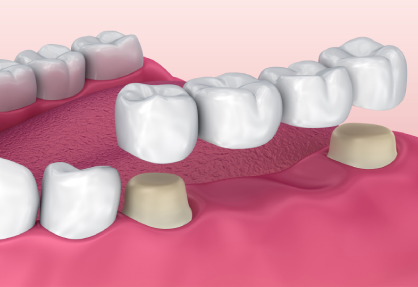
The short answer
Dental bridgework in India costs between USD 300 and USD 900 for a standard 3-unit bridge, replacing one missing tooth, against USD 1,500 to USD 4,500 for the same treatment in the US. A bridge anchors a false tooth to the two neighbouring teeth, restoring chewing and speech without the surgery an implant requires. Zirconia bridges sit at the higher end of the range and offer the strongest, most natural-looking result.
About Dental Bridgework
A dental bridge is a fixed restoration that closes the gap left by one or more missing teeth, anchoring a false tooth, called a pontic, to the natural teeth or implants on either side. It restores the ability to chew and speak normally, prevents neighbouring teeth from drifting into the gap, and maintains a natural-looking smile.
Procedures Available
A traditional bridge crowns the teeth on either side of the gap to support the pontic in between, and is the most common type. A cantilever bridge anchors to just one neighbouring tooth, used when there is only a tooth on one side of the gap. A Maryland bridge uses a metal or resin framework bonded to the back of neighbouring teeth rather than full crowns, preserving more natural tooth structure. An implant-supported bridge anchors to one or more implants rather than natural teeth, avoiding the need to prepare healthy teeth at all, and is generally recommended when several teeth in a row are missing.
Cost
Bridges are priced per unit, so a standard 3-unit bridge replacing one tooth costs less than a longer bridge spanning several missing teeth. Zirconia offers the strongest, most natural-looking option and costs more than PFM (porcelain-fused-to-metal), which remains a reliable, lower-cost choice for back teeth where aesthetics matter less.
How Long the Trip Takes
Most patients plan for 3 to 5 days in India. The supporting teeth are prepared and a digital impression or scan taken on the first visit, with a temporary bridge fitted immediately, and the permanent bridge cemented in place a few days later once the dental lab completes fabrication.
Choosing a Hospital
Ask which bridge material is quoted, since PFM and zirconia differ significantly in both price and long-term appearance, particularly on visible front teeth. For multiple missing teeth in a row, discuss whether an implant-supported bridge might serve better long-term than anchoring to natural teeth, since preparing healthy teeth for crowns is not reversible.
Dental Bridgework cost
| Country | Indicative cost |
|---|---|
| India — with Nobel Medi Assistance | $80 – $100 |
Figures are indicative for international patients and depend on the hospital, the surgeon and your reports. Your exact cost is confirmed in writing after a specialist review — free, and with no obligation.
What the estimate covers
Included
- Consultation and digital impression or scan
- Preparation of the supporting teeth
- The bridge material and dental lab fabrication
- Temporary bridge during fabrication
- Fitting and bite adjustment
Not included
- Flights and visa fees
- Accommodation outside the clinic
- Root canal treatment on a supporting tooth, if needed and not already quoted
- Implant placement fee, if choosing an implant-supported bridge
- Replacement, if the bridge needs to be remade due to a poor fit
- Treatment for other unrelated dental issues found during evaluation
Specialists who perform this






Where it is done


What would your Dental Bridgework cost?
Send your reports and a senior specialist sends back a written plan with costs within 24 hours. Free, with no obligation.