
Hip Replacement Surgery in India
Also known as Total hip replacement, THR, unilateral hip replacement, bilateral hip replacement, hip arthroplasty, hip resurfacing
The short answer
Hip replacement surgery in India costs between $4,000 and $12,000, single hip at the lower end and both hips at the higher end, against $40,000 or more in the US. The worn ball-and-socket joint is replaced with an artificial implant to relieve pain and restore mobility, most often for advanced arthritis, avascular necrosis, or hip fractures.
About Hip Replacement Surgery
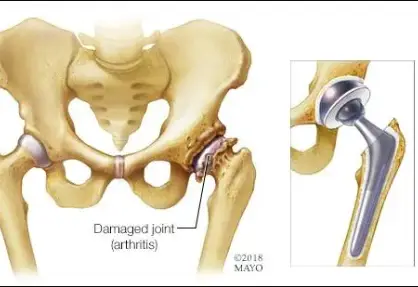
Hip replacement surgery treats a hip joint damaged by arthritis, avascular necrosis (loss of blood supply to the bone), or fracture, when pain and stiffness significantly limit daily activity and other treatments haven't provided enough relief. The surgeon removes the damaged ball of the thigh bone and the worn socket in the pelvis, replacing them with an artificial implant that recreates smooth, pain-free hip movement.
Unilateral vs bilateral hip replacement
Unilateral hip replacement treats one hip and is the more common procedure. Bilateral hip replacement treats both hips, either in the same operation for patients fit enough to tolerate a longer surgery and recovery, or as two staged surgeries a few weeks or months apart. Your surgeon will assess your overall fitness and the condition of both hips before recommending which approach suits you.
Total replacement vs partial replacement vs resurfacing
Total hip replacement, which replaces both the ball and socket, is the most common and well-established approach. Partial hip replacement (hemiarthroplasty) replaces only the ball, and is generally used for certain hip fractures rather than arthritis. Hip resurfacing, which reshapes rather than fully replaces the ball of the joint, is an option for select, typically younger and more active, patients with suitable bone quality. Your surgeon confirms the right approach based on your diagnosis, age and activity level.
Surgical approach and implant choice
Hip replacement can be done through different surgical approaches, including posterior and anterior approaches, each with its own recovery considerations that your surgeon will explain. Implants also vary by material combination, such as ceramic-on-plastic or ceramic-on-ceramic bearings, and by fixation method, cemented or cementless, chosen based on your bone quality and activity level. Robotic or navigation-assisted techniques are available at many centres for added precision in implant alignment.
Hip Replacement Surgery cost
| Country | Indicative cost |
|---|---|
| India — with Nobel Medi Assistance | $5,500 – $10,000 |
Figures are indicative for international patients and depend on the hospital, the surgeon and your reports. Your exact cost is confirmed in writing after a specialist review — free, and with no obligation.
What the estimate covers
Included
- Orthopaedic surgeon and surgical team fees
- Operation theatre and anaesthesia charges
- Hip implant(s) as agreed in the treatment plan
- Hospital stay for the planned duration
- Routine medicines during the hospital stay
- Physiotherapy sessions during admission
- Post-operative X-ray to confirm implant positioning
Not included
- Diagnostic workup, X-rays and MRI done before arrival in India
- Flights, visa and travel insurance
- Accommodation for the recovery period after discharge
- Robotic or navigation-assisted surgery fee, if chosen as an upgrade
- Treatment for complications unrelated to the surgery
- Extended outpatient physiotherapy after returning home
Specialists who perform this

Dr. I P S Oberoi
Orthopaedics / Robotic Joint Replacement & Arthroscopy 👑 33+ years
Dr Harshavardhan Hegde
Orthopedics / Spine Surgery 👑 40+ years
Dr Aashish Chaudhry
Orthopedics / Joint Replacement 👑 20+ years
Dr Rajesh Verma
Spine Surgery / Orthopedics 👑 28+ years
Dr (Prof.) Anil Arora
Orthopedics / Joint Replacement 👑 38+ years
Dr Subhash Jangid
Orthopedics / Joint Replacement 👑 27+ years
Dr Ashok Rajgopal
Orthopedics / Joint Replacement 👑 52+ yearsWhere it is done




What would your Hip Replacement Surgery cost?
Send your reports and a senior specialist sends back a written plan with costs within 24 hours. Free, with no obligation.