

IVF & Fertility in India
IVF, ICSI and IUI with embryology labs at internationally accredited standards.
Top doctors
for IVF & FertilitySenior specialists who perform these cases weekly, not occasionally.
- 20+ years of practice
- Written second opinion first
Top hospitals
for IVF & FertilityAccredited hospitals with the case volume this treatment actually requires.
- JCI and NABH accredited
- International patient desk
The short answer
One IVF cycle in India costs USD 2,500 to USD 4,500 including medication, against USD 15,000 to USD 25,000 in the United States. A full cycle takes four to six weeks, though much of the monitoring can be done in your home country before you travel.
About IVF & Fertility in India
IVF Treatment in India
IVF and fertility treatment in India at accredited fertility centres, with senior IVF specialists, transparent per-cycle pricing, and full support for Indian and international couples from the first test to a positive pregnancy scan.
Let Us Help You
Share your reports and get a free fertility opinion and cost estimate within 48 hours.
100% confidential · no cost, no obligation
IVF treatment in India costs from about $4,000 per cycle for international patients (roughly ₹1,50,000 to ₹2,80,000 for Indian patients before medication), which is a fraction of the US or UK price. A cycle needs about 18 to 21 days in India. Success depends mainly on the woman's age, from roughly 40 to 50 percent per cycle under 35 to under 10 percent after 42. India offers IVF, ICSI, IUI, frozen embryo transfer, egg freezing, PGT, and male infertility surgery, regulated under the ART (Regulation) Act, 2021. Nobel Medi Assistance matches you with leading IVF centres in India and senior IVF specialists in India. For a free case review, contact our team.
Infertility affects roughly one in six people of reproductive age worldwide, and it is not a female problem: around a third of cases trace to the man, a third to the woman, and the rest to both or to no identifiable cause. IVF, or in vitro fertilisation, is the treatment that has helped more of those couples than any other, and India has become one of the most trusted places to have it. Leading fertility centres in India run modern embryology labs with ICSI, blastocyst culture, vitrification, and preimplantation genetic testing to the same standards as Western clinics, at a cost that makes a second or third cycle realistic. This guide explains how IVF treatment in India works, who it suits, what it costs, honest success rates by age, the legal rules every couple should know, and how Nobel Medi Assistance plans the whole journey for you.
IVF Treatment in India: Key Facts
The numbers most couples ask about first, in one place.
| Question | Answer for IVF Treatment in India |
|---|---|
| Cost per IVF cycle | From about $4,000 for international patients; roughly ₹1,50,000 to ₹2,80,000 for Indian patients, plus medication |
| Time needed in India | About 18 to 21 days for one fresh cycle |
| Success rate per cycle | Roughly 40 to 50 percent under age 35, falling to under 10 percent after 42 |
| Treatments available | IVF, ICSI, IUI, frozen embryo transfer, egg and embryo freezing, PGT, donor IVF, Micro-TESA |
| Age limits under Indian law | Women 21 to 50 years, men 21 to 55 years (ART Act, 2021) |
| Sex selection | Prohibited by law in India |
| Commercial surrogacy | Prohibited; only altruistic surrogacy for eligible Indian couples |
| Hospital stay for egg retrieval | Day care, home the same day |
IVF treatment in India is regulated by law. The Assisted Reproductive Technology (Regulation) Act, 2021 requires every IVF clinic and gamete bank to be registered on the national ART registry, and sets age limits of 21 to 50 for women and 21 to 55 for men receiving treatment. Sex selection is a criminal offence, and genetic testing of embryos is permitted only to screen for disease, never to choose a baby's sex. Egg and sperm donation is anonymous and tightly controlled. Commercial surrogacy is banned under the Surrogacy (Regulation) Act, 2021, and altruistic surrogacy is limited to eligible Indian couples, so foreign nationals should not plan on surrogacy in India. Any agency that offers you sex selection or paid surrogacy is breaking the law. Nobel Medi Assistance works only with registered clinics, and we will tell you plainly if a treatment you are asking about is not permitted. Rules can change, so we confirm the current position for your case before you travel.
Why Couples Choose IVF Treatment in India
Modern embryology labs, experienced specialists, and a cost that turns one attempt into a real chance.
Cost That Allows a Second Try
IVF rarely works on the first cycle anywhere in the world. At Indian pricing, many couples can afford two or three cycles for less than the cost of one abroad, and success is cumulative across cycles.
Modern Embryology Labs
ICSI, blastocyst culture, time-lapse embryo monitoring, vitrification, and PGT are standard at leading IVF centres in India, with the same lab protocols used in Western clinics.
Experienced IVF Specialists
Senior IVF specialists in India have decades of practice behind them, which matters most in difficult cases such as low ovarian reserve, repeated IVF failure, and severe male infertility.
The first thing every couple should hear is that IVF is a numbers game. Even in the best clinics in the world, a single cycle fails more often than it succeeds for most women over 35, and the honest measure of a fertility plan is not the odds of one cycle but the cumulative chance across two or three. That is exactly where IVF treatment in India changes the picture. When one cycle costs a fraction of the Western price, a couple can plan for more than one attempt from the start, freeze good-quality embryos for later transfers, and add genetic testing where it genuinely helps, rather than stretching every rupee on a single try.
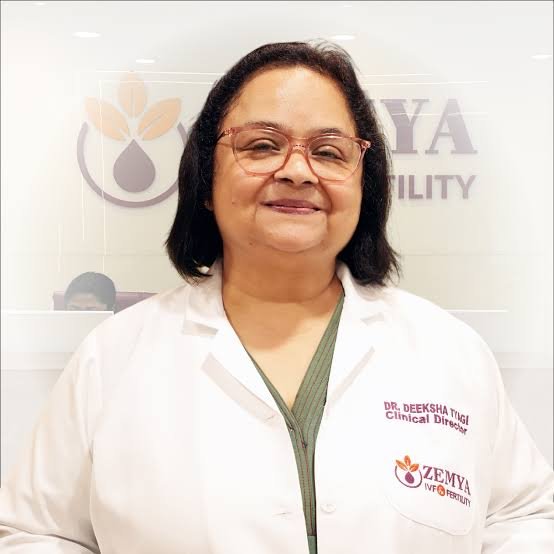
The second reason is the lab. The success of IVF depends heavily on the embryology laboratory: how eggs are handled, how embryos are cultured to the blastocyst stage, and how well they survive freezing. The best IVF centres in India run ICSI for male factor infertility, extended blastocyst culture, vitrification for egg and embryo freezing, and PGT for couples with genetic disease or recurrent miscarriage. Experienced IVF specialists such as Dr. Kaberi Banerjee, Dr. Parul Katiyar, Dr. Deeksha Tyagi, and Dr. Sujata Garg lead dedicated fertility units in Delhi NCR, alongside senior gynaecologists such as Prof. (Dr.) Shakti Bhan Khanna, Dr. Alka Gujral, and Dr. Rekha Gupta.
The third reason is support. IVF needs about three weeks in India and a great deal of emotional energy, so the practical side matters. For international couples we arrange medical visa assistance for the patient and partner, airport pickup, interpreters, and accommodation near the clinic, and we keep in touch through the two-week wait after you fly home. Nobel Medi Assistance never marks up clinic pricing, and every estimate we send includes medication, freezing, and lab charges rather than hiding them.
Types of IVF and Fertility Treatment in India
IVF, ICSI, IUI, frozen embryo transfer with egg freezing and PGT, and male infertility surgery make up most fertility treatment in India. Each links to a detailed page where one exists.
1. IVF (In Vitro Fertilisation) in India
IVF is the core of modern fertility treatment, and it follows the same steps everywhere. First comes ovarian stimulation: about ten to twelve days of hormone injections to grow several eggs at once, monitored with ultrasound scans and blood tests. When the follicles are ready, a trigger injection matures the eggs, and about thirty-six hours later they are collected in a short day-care procedure under sedation, using a fine needle guided by ultrasound. In the lab, the eggs are fertilised with sperm and the resulting embryos are grown for three to five days, ideally to the blastocyst stage. One embryo is then transferred into the uterus through a thin catheter, which is painless and takes minutes, and any other good embryos are frozen for later use. A pregnancy blood test follows about two weeks later. Transferring a single embryo rather than two is now standard practice, because twins carry real risks for both mother and babies. IVF is the right treatment for blocked or damaged fallopian tubes, moderate to severe male infertility, endometriosis, low ovarian reserve, unexplained infertility after other treatments fail, and couples using donor eggs. Read the full guide to IVF procedure cost in India.
2. ICSI (Intracytoplasmic Sperm Injection) in India
ICSI is a laboratory technique used within an IVF cycle, and it transformed the outlook for male infertility. Instead of placing eggs and sperm together and waiting for fertilisation to happen naturally, the embryologist selects a single healthy sperm and injects it directly into each mature egg under a microscope. That makes fertilisation possible even when the sperm count is very low, movement is poor, or the shape of most sperm is abnormal, and it is also used when a previous IVF cycle produced little or no fertilisation, when frozen or surgically retrieved sperm is used, and when eggs have been frozen. The rest of the cycle is identical to IVF, and so is the time needed in India. ICSI adds to the lab cost, so a good clinic uses it when there is a clear reason rather than routinely for everyone. IVF with ICSI is available at every leading IVF centre in India in our network, and it is covered within the IVF procedure package when needed.
3. IUI and Ovulation Induction in India
Not every couple needs IVF, and a good fertility specialist starts with the simplest treatment that has a realistic chance of working. Ovulation induction uses tablets such as letrozole, or low-dose injections, to help a woman release an egg each month, and it is the usual first step for PCOS, the commonest cause of irregular ovulation. IUI, or intrauterine insemination, places washed and concentrated sperm directly into the uterus around the time of ovulation, often combined with ovulation induction. It suits mild male factor infertility, unexplained infertility in younger women, and couples using donor sperm. IUI is quick, inexpensive, and needs no anaesthesia, but its success rate per cycle is much lower than IVF, typically around ten to fifteen percent in younger women, so most specialists suggest moving to IVF after three or four unsuccessful IUI cycles, or sooner if the woman is older. IUI requires the fallopian tubes to be open, which is why a tubal test comes first. Speak to our fertility specialists about whether IUI or IVF is the right starting point for you.
4. Frozen Embryo Transfer, Egg Freezing and PGT in India
Freezing has quietly become one of the most important parts of IVF treatment in India. Modern vitrification, an ultra-rapid freezing method, means embryos and eggs survive thawing at very high rates. In a frozen embryo transfer, embryos created in an earlier cycle are thawed and transferred in a later month when the uterine lining has been prepared, and for many women this gives results equal to or better than a fresh transfer, because the body is no longer recovering from stimulation. It also allows a couple to have one stimulation and several transfers. Egg freezing lets a woman preserve fertility before cancer treatment, or for personal reasons, ideally before her mid-thirties when egg quality is higher. Preimplantation genetic testing, or PGT, examines a few cells from each embryo before transfer: PGT-M screens for a specific inherited disease such as thalassaemia when both parents are carriers, and PGT-A checks chromosome number, which can help after recurrent miscarriage or repeated IVF failure. Under Indian law PGT may be used only to prevent disease, never to choose sex. Ask your specialist whether PGT genuinely helps in your case, because it adds cost and is not needed by everyone.
5. Male Infertility Treatment and Micro-TESA in India
A semen analysis is the cheapest and quickest test in fertility medicine, and it should be done at the very start rather than after months of investigating only the woman. Many male factor problems, such as a low count or poor motility, are overcome with ICSI. The harder situation is azoospermia, where no sperm at all appear in the ejaculate. If the cause is a blockage, sperm can usually be retrieved directly from the epididymis or testis with a simple needle procedure. If sperm production itself is very low, microsurgical sperm retrieval, known as Micro-TESE or Micro-TESA, uses an operating microscope to search the testicular tissue for the small pockets where sperm are still being made, and any sperm found are frozen and used with ICSI. A varicocele, an enlarged vein in the scrotum, can also reduce sperm quality, and repairing it sometimes helps. Male infertility is assessed by an andrologist or urologist working with the IVF team. Read the full guide to Micro-TESA surgery in India, and see urology treatment in India for related male health care.
Fertility often depends on treating another condition first. Fibroids that distort the uterine cavity may need a myomectomy or robotic myomectomy before an embryo transfer, endometriosis may need robotic endometriosis resection, and a large ovarian cyst may need ovarian cyst removal. For women whose weight is affecting ovulation, bariatric surgery in India can restore natural fertility, and thyroid or diabetes problems are managed through diabetes and endocrinology. For wider women's health, see obstetrics and gynecology in India, or browse all procedures with indicative costs.
Fertility Problems Treated with IVF in India
The IVF centres in India we work with treat the full range of female, male, and unexplained infertility.
IVF Success Rates in India by Age
Age is the single biggest factor in IVF success, anywhere in the world. These are typical ranges using a woman's own eggs.
| Woman's Age | Approximate Chance of Live Birth per Cycle | What It Means |
|---|---|---|
| Under 35 | About 40 to 50 percent | Best odds; most couples succeed within two to three cycles |
| 35 to 37 | About 30 to 40 percent | Still good; freezing extra embryos helps |
| 38 to 40 | About 20 to 30 percent | Plan for more than one cycle from the start |
| 41 to 42 | About 10 to 15 percent | PGT and donor egg options worth discussing |
| Over 42 | Under 10 percent | Donor egg IVF gives much higher success |
Note: These are general ranges for guidance, not a promise. Your own chances also depend on ovarian reserve, sperm quality, the cause of infertility, embryo quality, and the clinic's laboratory. Any clinic that quotes a single high success rate without asking your age and reports is selling rather than advising.
Cost of IVF Treatment in India
IVF is priced per cycle, and the honest figure always includes medication, lab work, and freezing.
The figures below are indicative, to help you plan rather than fixed quotes. IVF treatment in India costs a fraction of the same cycle in the US, UK, or Gulf, and Nobel Medi Assistance sends a personalised, all-inclusive estimate once we review both partners' reports.
| Fertility Treatment in India | Indicative Cost (Indian Patients) | International Package From | Full Cost Breakdown |
|---|---|---|---|
| IVF (one cycle) | ₹1,50,000 to ₹2,80,000 | $4,000 | See breakdown → |
| IVF with ICSI (one cycle) | ₹2,00,000 to ₹3,50,000 | On request | See breakdown → |
| Fertility medication (per cycle) | ₹60,000 to ₹1,50,000 | Included in quote | Varies with dose and protocol |
| Micro-TESA (surgical sperm retrieval) | On request | $1,500 | See breakdown → |
Note: Costs change with the clinic, the stimulation protocol and medication dose, whether ICSI is needed, embryo freezing and storage, frozen embryo transfer, PGT, and donor egg or sperm. Always ask for an all-inclusive figure. Ask us for a written estimate before you decide.
Three things are worth checking before you compare IVF quotes. First, ask whether medication is included, because fertility drugs are often quoted separately and can add a large share of the total. Second, ask what happens to extra embryos: freezing, storage, and a later frozen transfer each carry a cost, and a package that includes them is often better value. Third, ask whether the quote is per cycle or per attempt, and whether it includes the pregnancy test and first scan. Most Indian health insurance plans do not yet cover IVF, so most couples pay directly, while international patients usually pay through an all-inclusive package. Nobel Medi Assistance helps you read the fine print. Ask us for a written estimate →
Why Couples Choose Nobel Medi Assistance
Plenty of companies promise to arrange treatment. What sets us apart for IVF treatment in India is honesty about the odds, and support that lasts through the two-week wait.
Fertility enquiries handled confidentially, always
Only ART-registered IVF centres, fully within Indian law
Free fertility opinion after reviewing both partners' reports
Visa for both partners, accommodation, interpreters, and follow-up
All-inclusive estimates with medication and freezing shown
See real outcomes on our patient success stories page, and learn more about us and how we work.
How IVF Treatment in India Works, Step by Step
A typical fresh IVF cycle takes about three weeks in India. As a medical assistance company based in Delhi, we manage the whole path:
Free Case Review
Share AMH, ultrasound, hormone, and semen analysis reports and we get a senior IVF specialist's opinion within 48 hours.
Plan & Cost
You receive a treatment plan and an all-inclusive estimate, with medication and freezing shown, across matched IVF centres.
Stimulation (Days 1 to 12)
Hormone injections with regular scans and blood tests, usually started on day two or three of the period.
Egg Retrieval & Transfer
Day-care egg collection, fertilisation in the lab, and embryo transfer three to five days later.
Two-Week Wait & Test
Pregnancy blood test about 14 days after transfer, with teleconsult support if you have flown home.
This end-to-end support is what makes IVF treatment in India feel manageable rather than overwhelming, whether you are travelling from within India or from another country. If you are coming from abroad, our medical visa assistance team issues the clinic invitation letter and guides both partners through the paperwork, since the male partner usually needs to be present for the sperm sample.
Tests Done Before IVF Treatment in India
Fertility testing covers both partners from the first visit. For the woman, AMH and an antral follicle count on ultrasound measure ovarian reserve, which predicts how she will respond to stimulation. A baseline hormone profile on day two or three of the cycle, together with thyroid function and prolactin, checks the hormonal background. A pelvic ultrasound looks for fibroids, polyps, cysts, and endometriosis, and an HSG or sonography test checks whether the fallopian tubes are open. A hysteroscopy may be advised if the uterine cavity looks abnormal. For the man, a semen analysis measures count, movement, and shape, with further hormone or genetic tests if the result is poor. Both partners are screened for HIV, hepatitis B and C, and syphilis, as required before any IVF treatment, and couples with a family history of conditions such as thalassaemia may be offered carrier testing. Bringing these reports with you, or sending them in advance, can shorten your time in India.
After the Embryo Transfer
There is very little physical recovery after IVF. Egg retrieval is done under short sedation, and most women rest for the remainder of the day and return to normal activity the next. Mild bloating and cramping for a few days are common. A small number of women develop ovarian hyperstimulation syndrome, with significant bloating, nausea, or breathlessness, which needs prompt medical review, and modern protocols have made severe cases rare. Bed rest after embryo transfer is not needed and does not improve success, so gentle normal activity is fine. Progesterone support, given as pessaries, gel, or injections, continues until the pregnancy test and beyond if it is positive. The hardest part for most couples is the two-week wait, and it is worth preparing for emotionally as well as practically. If the test is positive, an early ultrasound confirms the pregnancy at around six to seven weeks. If it is negative, your specialist reviews the cycle with you and plans the next step. Nobel Medi Assistance stays in touch throughout, and for international couples we confirm you are fit to fly before you leave.
IVF Treatment in India: Your Questions Answered
Scroll within the panel below for all 12 questions on IVF treatment in India.
Scroll for more questions
Talk to Us About Your Fertility Journey
Whether you need IVF, ICSI, IUI, a frozen embryo transfer, egg freezing, genetic testing, or male infertility treatment, Nobel Medi Assistance connects you with the right specialist and registered clinic for affordable, honest IVF treatment in India. Share your reports today, in complete confidence, and let us handle the rest.
Indicative costs
| Procedure | Cost from (USD) | Details |
|---|---|---|
| Micro Tesa Surgery | $1,500 | See breakdown → |
| IVF Procedure | $4,000 | See breakdown → |
Estimates are indicative and all-inclusive for international patients. Your final cost is confirmed in writing after a specialist reviews your reports.
All procedures
No procedure matches that. Send us your reports and we will tell you what applies.
Specialists in IVF & Fertility
Senior consultants treating this condition at our partner hospitals.



Find out what your treatment would cost
A senior specialist reviews your reports and sends a written plan within 48 hours. Free, with no obligation.