
Knee Replacement Surgery in India
Also known as Total knee replacement, TKR, unilateral knee replacement, bilateral knee replacement, knee arthroplasty, robotic knee replacement
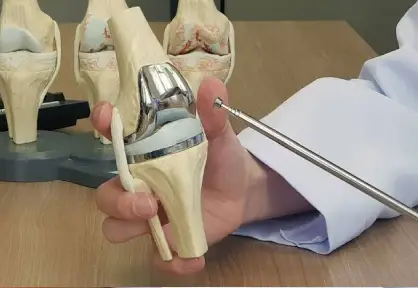
The short answer
Knee replacement surgery in India costs between $4,000 and $10,000, single knee at the lower end and both knees at the higher end, against $30,000 to $50,000 in the US. The worn or damaged knee joint surfaces are replaced with an artificial implant to relieve pain and restore mobility, usually for advanced arthritis that has not responded to other treatment.
About Knee Replacement Surgery
Knee replacement surgery, or total knee arthroplasty, treats a knee joint so damaged by arthritis or injury that it causes persistent pain, stiffness and limited mobility despite medication, physiotherapy or injections. The surgeon removes the damaged surfaces of the knee joint and replaces them with an artificial implant made of metal alloys and high-grade plastic, restoring smooth, pain-free movement.
Unilateral vs bilateral knee replacement
Unilateral knee replacement treats one knee, and is the more common procedure. Bilateral knee replacement treats both knees, either in the same operation (simultaneous) or as two separate surgeries a few weeks or months apart (staged), depending on your overall fitness and your surgeon's assessment. Simultaneous bilateral surgery means one recovery period instead of two, but requires a longer single hospital stay and is generally reserved for patients fit enough to tolerate it.
Total vs partial knee replacement
Most knee replacements are total, replacing all three compartments of the knee joint. In select cases where arthritis is limited to just one part of the knee, a partial (unicompartmental) knee replacement may be an option instead, involving a smaller incision and preserving more of the natural knee, though not every patient with knee arthritis is a suitable candidate for this more limited approach.
Implant types and robotic assistance
Knee implants vary by material and design, from standard metal-and-plastic implants to higher-flex or custom-fit designs suited to more active patients. Many partner hospitals also offer robotic-assisted knee replacement, where a robotic system helps the surgeon achieve highly precise implant alignment and positioning, which can support a smoother recovery. Your surgeon will discuss which implant and technique best suits your knee anatomy, activity level and budget.
Why patients choose India for this
India uses the same internationally certified knee implant brands (Zimmer Biomet, Stryker, DePuy Synthes and others) used in Western hospitals, at a fraction of the surgical cost.
India's leading orthopaedic centres perform very high volumes of knee replacement surgery annually, giving surgeons deep, repeated experience with both standard and complex cases.
Partner hospitals offer robotic-assisted knee replacement for patients who want the added precision this technology provides, an option not universally accessible or affordable in many Western healthcare systems.
Successful knee replacement depends heavily on early, guided physiotherapy; partner hospitals build a structured rehab program into the admission itself rather than leaving it to arrange separately.
Knee Replacement Surgery cost
| Country | Indicative cost |
|---|---|
| India — with Nobel Medi Assistance | $4,000 – $10,000 |
| United States | $30,000 - $50,000 |
| United Kingdom | $15,000 - $21,000 |
| UAE / Middle East | $15,000 - $25,000 |
| Singapore | $18,000 - $28,000 |
Figures are indicative for international patients and depend on the hospital, the surgeon and your reports. Your exact cost is confirmed in writing after a specialist review — free, and with no obligation.
What the estimate covers
Included
- Orthopaedic surgeon and surgical team fees
- Operation theatre and anaesthesia charges
- Knee implant(s) as agreed in the treatment plan
- Hospital stay for the planned duration
- Routine medicines during the hospital stay
- Physiotherapy sessions during admission
- Post-operative X-ray to confirm implant positioning
Not included
- Diagnostic workup, X-rays and MRI done before arrival in India
- Flights, visa and travel insurance
- Accommodation for the recovery period after discharge
- Robotic-assisted surgery fee, if chosen as an upgrade over standard technique
- Treatment for complications unrelated to the surgery
- Extended outpatient physiotherapy after returning home
How Knee Replacement Surgery is done
- Consultation and reviewAn orthopaedic surgeon reviews your X-rays and history remotely to confirm the diagnosis and whether total or partial replacement, and unilateral or bilateral surgery, fits your case.
- Pre-operative workupOn arrival, imaging, blood work and fitness assessments confirm you are ready for surgery and finalise the implant plan.
- Anaesthesia and accessUnder spinal, epidural or general anaesthesia, the surgeon makes an incision to access the knee joint.
- Removing damaged surfacesThe damaged ends of the thigh bone and shin bone, and the underside of the kneecap if needed, are precisely reshaped to receive the implant.
- Implanting the new jointThe artificial implant components are fitted and secured, with robotic guidance used where selected, and the knee is tested through its range of motion before closing.
- Recovery and early mobilisationYou are moved to a recovery room, and physiotherapy typically begins within a day, with most patients standing and taking supported steps early in recovery.
- Discharge and rehab planYou go home with a structured physiotherapy plan, pain management guidance, and a follow-up schedule to monitor healing and implant function.
Recovery and what to expect
- First 24-48 hoursPain is managed actively; physiotherapy usually starts within a day, with assisted standing and short walks.
- Days 3-5Walking with a walker or crutches improves daily; wound checks continue as you build toward discharge readiness.
- 4-7 daysDischarged from hospital once mobility and pain are on track, moving to guided outpatient physiotherapy.
- 2-3 weeksContinued physiotherapy at your accommodation in India, with walking distance and knee bend improving steadily before a follow-up check and flying home.
- 6-12 weeksMost patients walk without support and resume most daily activities, with full recovery and higher-impact activities generally reached by 3-6 months.
Specialists who perform this

Dr. I P S Oberoi
Orthopaedics / Robotic Joint Replacement & Arthroscopy 👑 33+ years
Dr Harshavardhan Hegde
Orthopedics / Spine Surgery 👑 40+ years
Dr Aashish Chaudhry
Orthopedics / Joint Replacement 👑 20+ years
Dr Rajeev Verma
Orthopedics / Joint Replacement 👑 26+ years
Dr Rajesh Verma
Spine Surgery / Orthopedics 👑 28+ years
Dr (Prof.) Anil Arora
Orthopedics / Joint Replacement 👑 38+ years
Dr Subhash Jangid
Orthopedics / Joint Replacement 👑 27+ years
Dr Ashok Rajgopal
Orthopedics / Joint Replacement 👑 52+ years
Dr Vipul Vijay
Orthopedics / Sports Medicine 👑 14+ yearsWhere it is done



Frequently asked questions
Do I need both knees replaced at once, or one at a time?
Is robotic-assisted knee replacement better than standard surgery?
How long will my knee implant last?
Is partial knee replacement an option for me?
How long do I need to stay in India?
When can I walk without support?
Why is knee replacement so much cheaper in India than in my home country?
What would your Knee Replacement Surgery cost?
Send your reports and a senior specialist sends back a written plan with costs within 24 hours. Free, with no obligation.