

Gastrointestinal Surgeries in India
Gallbladder, hernia, bariatric, colorectal, liver and pancreatic surgery at accredited hospitals in India.
Top doctors
for Gastrointestinal SurgeriesSenior specialists who perform these cases weekly, not occasionally.
- 20+ years of practice
- Written second opinion first
Top hospitals
for Gastrointestinal SurgeriesAccredited hospitals with the case volume this treatment actually requires.
- JCI and NABH accredited
- International patient desk
The short answer
Gastrointestinal surgery in India covers laparoscopic gallbladder and hernia surgery, bariatric and weight-loss surgery, colorectal surgery for cancer and IBD, liver, pancreas and biliary surgery, and upper GI surgery for reflux and swallowing disorders. Gallbladder removal costs USD 2,000 to USD 3,500 and hernia repair USD 1,800 to USD 3,200, while a Whipple procedure costs USD 9,000 to USD 16,000, roughly 70 to 85% below US and UK prices.
About Gastrointestinal Surgeries in India
Why Patients Choose Gastrointestinal Surgery in India
From a routine gallbladder removal to a major liver resection, GI surgery covers an enormous range. Here is why so many patients travel to India across that whole range, not just at one end of it.
Gastrointestinal surgery in India spans the entire digestive tract, and what brings patients here changes depending on where in that range their case sits. For common, high-volume procedures such as gallbladder removal and hernia repair, the draw is straightforward cost: the same laparoscopic technique, the same imported mesh and instrumentation, done in a day surgery setting for a fraction of the Western price. For complex hepatobiliary and pancreatic surgery, the draw is a smaller number of surgeons who genuinely operate on the liver and pancreas often enough to be good at it, since these are procedures where surgeon and hospital volume make a measurable difference to outcome. Both patients are looking at the same specialty for different reasons, and the honest answer to which one applies depends entirely on the diagnosis.
Laparoscopic and minimally invasive technique is now the default across most of GI surgery in India, not the exception. Gallbladder removal, hernia repair, fundoplication for reflux, and increasingly colorectal cancer surgery and even some liver resections are done through small incisions with a camera, which means less pain, a shorter hospital stay, and a faster return to normal activity than open surgery. Robotic-assisted surgery is now available at a growing number of Indian centres for the more technically demanding procedures, particularly rectal cancer surgery in the confined space of the pelvis, where the added precision genuinely helps.
Where GI surgery gets genuinely complex, in liver, pancreatic and advanced colorectal cancer surgery, India's larger cancer and hepatobiliary centres run multidisciplinary teams that plan the case jointly between surgery, oncology and gastroenterology before anyone operates, exactly as this kind of surgery should be planned anywhere in the world. Nobel Medi Assistance works with a network anchored in Delhi NCR and extending to India's major hepatobiliary and oncology centres, and we arrange the medical visa, interpreter, airport pickup and accommodation so the trip runs to plan.
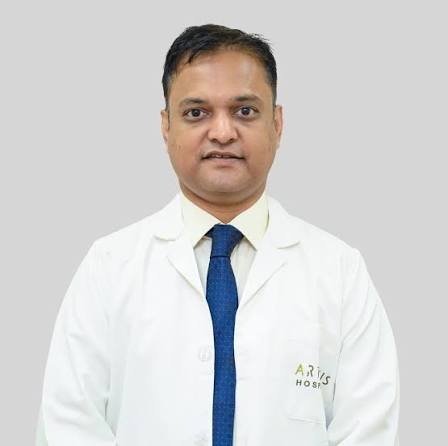
Among the GI surgeons our patients are referred to are Dr. Adarsh Chaudhary, Chairman of the Institute of Digestive and Hepatobiliary Sciences at Medanta, Gurugram, known for pancreatic and hepatobiliary surgery including the Whipple procedure, Dr. Sandeep Aggarwal, Chairman of Minimal Access, Bariatric, GI and Robotic Surgery at Manipal Hospital, Dwarka, and formerly of AIIMS, New Delhi, Dr. Atul N.C. Peters, Vice Chairman of Bariatric, Minimal Access and Robotic Surgery at Max Saket, New Delhi, and Dr. Rakesh Durkhure, Head of General, Minimally Invasive and Bariatric Surgery at Artemis Hospital, Gurugram. Compare more specialists on our best GI surgeons in India page and centres on our best gastrointestinal surgery hospitals in India page.
Gastrointestinal surgery in India covers laparoscopic gallbladder and hernia surgery, bariatric and weight-loss surgery, colorectal surgery for cancer and inflammatory bowel disease, liver, pancreas and biliary surgery, and upper GI surgery for reflux and swallowing disorders. Laparoscopic gallbladder removal costs USD 2,000 to USD 3,500 and hernia repair USD 1,800 to USD 3,200, while complex procedures such as a Whipple operation cost USD 9,000 to USD 16,000, roughly 70 to 85% below US and UK prices.
Types of Gastrointestinal Surgery in India We Cover
These five areas cover most of what patients travel for. Where we have a detailed cost page, it is linked so you can read further on the exact procedure your doctor has recommended.
1. Laparoscopic Gallbladder and Hernia Surgery
Gallstones that cause repeated pain, infection or blockage of the bile duct are treated by removing the gallbladder entirely, since it is not an organ the body needs and the gallbladder itself is what keeps forming stones. Laparoscopic cholecystectomy, done through four small incisions with a camera, is now the standard approach and is usually a day surgery or overnight stay procedure with return to normal activity within a week. Hernia repair, whether inguinal, umbilical or an incisional hernia from a previous surgery, follows the same minimally invasive principle, placing a mesh to reinforce the weakened area through small incisions rather than a large open cut, which means less pain and a faster return to work than traditional open repair. Both are among the highest-volume procedures at Indian day surgery centres, and volume in these specific operations is exactly what keeps complication rates low. Robotic versions of both are also available: see robotic gallbladder removal cost, robotic hernia surgery cost and our robotic and minimally invasive surgery in India page.
2. Bariatric and Weight-Loss Surgery
Bariatric surgery is offered in India for patients with a BMI above 37.5, or above 32.5 where an obesity-related condition such as high blood pressure, sleep apnoea or joint disease is also present, and who have not achieved lasting weight loss through diet and lifestyle change alone. Sleeve gastrectomy, removing roughly 75% of the stomach to create a narrow sleeve, and gastric bypass, rerouting part of the small intestine, are the two most common procedures, both done laparoscopically with a hospital stay of 3 to 5 days. Where the primary driver is type 2 diabetes rather than weight itself, the same operations are used but the assessment and eligibility criteria differ, which is covered in full detail on our diabetes and endocrinology page. Every bariatric patient commits to lifelong vitamin and mineral supplementation afterwards, since the surgery permanently changes how the gut absorbs nutrients, and that commitment is discussed before surgery rather than after. See bariatric surgery in India, sleeve gastrectomy cost and gastric bypass cost.
3. Colorectal Surgery: Cancer, IBD and Diverticular Disease
Colorectal cancer surgery removes the affected section of colon or rectum along with its lymph nodes, and is planned by a multidisciplinary team that reviews the imaging and pathology together before deciding whether surgery comes first or after chemotherapy and radiation, particularly for rectal cancer. Laparoscopic and robotic-assisted colectomy are now standard for most cases, and robotic assistance specifically helps in the confined space of the pelvis during rectal surgery. Inflammatory bowel disease, meaning severe Crohn's disease or ulcerative colitis that has not responded to medical therapy, sometimes needs surgery to remove the diseased segment of bowel or, in ulcerative colitis, the entire colon, and these cases are managed jointly between colorectal surgery and gastroenterology. Diverticulitis that keeps recurring or causes a complication such as a perforation or fistula follows a similar surgical pathway. Learn more about bowel resection cost in India, rectal cancer surgery, ostomy (stoma) creation and colonoscopy.
4. Liver, Pancreas and Biliary Surgery
This is the technically demanding end of GI surgery, and outcomes here depend heavily on how often a hospital does these specific operations. Liver resection removes part of the liver for a tumour, whether primary liver cancer or cancer that has spread from elsewhere, and is possible in a meaningful number of cases because the liver regenerates. The Whipple procedure, removing the head of the pancreas along with part of the stomach, bile duct and small intestine, is the standard operation for tumours at the head of the pancreas and is one of the more complex operations in abdominal surgery, best done at a genuinely high-volume centre. Bile duct strictures and gallstones stuck in the bile duct are often managed with ERCP, an endoscopic procedure that avoids surgery entirely in many cases. Where liver failure cannot be managed any other way, liver transplant is available, governed by the same Transplantation of Human Organs and Tissues Act that applies to kidney transplant, meaning a foreign national needs a documented near relative as a living donor and Authorisation Committee approval, exactly as set out on our nephrology page. Explore liver resection cost in India, Whipple surgery cost, ERCP and liver transplant cost in India.
5. Upper GI Surgery: Reflux, Hiatal Hernia and Achalasia
Chronic acid reflux that has stopped responding to medication, or that a patient does not want to take medication for indefinitely, is treated with laparoscopic fundoplication, wrapping the top of the stomach around the lower oesophagus to rebuild the valve that is failing. A hiatal hernia, where part of the stomach has moved up through the diaphragm into the chest, is usually repaired at the same time, since it is very often the reason the reflux valve stopped working in the first place. Achalasia, a condition where the muscle at the bottom of the oesophagus does not relax properly and swallowing becomes progressively difficult, is treated with either a laparoscopic Heller myotomy or the newer endoscopic POEM procedure, both aimed at cutting the tight muscle without an incision through the chest. Surgery for oesophageal cancer is a different and more extensive operation, covered in detail on our thoracic surgery page rather than here. Read about GERD surgery cost in India, oesophageal surgery and upper endoscopy (EGD).
Beyond these five, our network also covers appendectomy, endoscopic mucosal resection for early GI cancers, chronic pancreatitis and pancreatic surgery, robotic liver resection, rectal prolapse surgery, and stoma reversal surgery. GI cancers are planned with our cancer treatment in India teams. For a fuller list, browse the best GI surgery hospitals in India or all procedures and costs.
What Gastrointestinal Surgery in India Costs
Indicative ranges at accredited hospitals in our network, in US dollars. Complexity and hospital volume matter more in this specialty than almost any other.
| Treatment | Cost in India (USD) | Typical US / UK Cost | Time Needed in India |
|---|---|---|---|
| GI consultation with endoscopy workup | 150 to 400 | 1,500 to 3,000 | 2 to 3 days |
| Laparoscopic cholecystectomy, gallbladder removal | 2,000 to 3,500 | 12,000 to 20,000 | 3 to 5 days |
| Laparoscopic hernia repair | 1,800 to 3,200 | 10,000 to 18,000 | 3 to 5 days |
| Sleeve gastrectomy | 4,000 to 6,500 | 20,000 to 25,000 | 10 to 14 days |
| Gastric bypass, Roux-en-Y or mini | 4,500 to 8,000 | 25,000 to 35,000 | 10 to 14 days |
| Laparoscopic colectomy for colorectal cancer | 5,000 to 9,000 | 30,000 to 45,000 | 10 to 14 days |
| Complex or open colorectal resection with stoma | 6,000 to 11,000 | 35,000 to 55,000 | 12 to 16 days |
| Proctocolectomy for inflammatory bowel disease | 6,500 to 12,000 | 40,000 to 60,000 | 14 to 18 days |
| Liver resection, partial hepatectomy | 7,000 to 13,000 | 45,000 to 70,000 | 12 to 18 days |
| Whipple procedure, pancreaticoduodenectomy | 9,000 to 16,000 | 60,000 to 90,000 | 14 to 21 days |
| Living donor liver transplant | 30,000 to 45,000 | 300,000 to 500,000 | 8 to 10 weeks total |
| Laparoscopic fundoplication for reflux | 2,500 to 4,500 | 15,000 to 25,000 | 5 to 7 days |
| Achalasia treatment, Heller myotomy or POEM | 3,000 to 5,500 | 18,000 to 30,000 | 5 to 7 days |
Indicative ranges only, and not a substitute for a clinical opinion. Cancer staging, prior surgery, and the extent of resection needed all move the final figure. Every estimate we send is itemised.
The single biggest cost driver in GI surgery is where on the spectrum your procedure sits. Gallbladder and hernia surgery are standardised, high-volume operations with predictable pricing across most accredited hospitals. Liver, pancreatic and complex colorectal surgery are not standardised in the same way, because the cost depends on the extent of disease found once the surgeon is actually looking, the length of ICU stay needed, and whether a straightforward resection turns into something more extensive once imaging is reviewed in detail. This is why we ask for your full imaging and pathology before quoting on anything hepatobiliary, pancreatic or oncological, rather than giving a number from a diagnosis alone.
For liver transplant specifically, the figure includes both recipient and donor surgery and hospital stay, and living costs for both of you across 8 to 10 weeks in India are real money that belongs in the written estimate, exactly as with kidney transplant.
Why Patients Trust Nobel Medi Assistance for Gastrointestinal Surgery in India
Plenty of companies promise to arrange treatment. What sets us apart for gastrointestinal surgery in India is the depth of support and a record you can actually check.
GI surgery cases coordinated across our network
Partner hospitals with dedicated hepatobiliary and colorectal units
Free opinion from a senior GI surgeon on your reports and imaging
Visa invitation, interpreters, stay, and teleconsult follow-up after you fly home
Investigation and treatment costed separately, no hidden facilitator fees
See real outcomes and stories on our patient success stories page, and learn more about us and the services we provide.
How the Process Works
Arranging gastrointestinal surgery in India involves far more than booking an operating room. As a medical assistance company based in Delhi NCR, serving patients across India, we manage the whole path:
Send Your Reports
Share imaging, endoscopy and pathology reports, and a senior GI surgeon reviews the case within 48 hours.
Plan & Cost Estimate
You receive an itemised estimate from two or three matched hospitals, based on your actual imaging rather than a diagnosis alone.
Travel & Visa Help
For international patients, we assist with the medical visa invitation, flights and a stay near the hospital.
Admission & Surgery
Airport pickup, a dedicated coordinator, interpreter support, and a smooth admission.
Recovery & Follow-up
Dietary guidance, wound care, and teleconsults after you fly home.
For hepatobiliary, pancreatic and cancer cases, this review is genuinely multidisciplinary before we quote anything, since the right operation, and sometimes whether surgery is the right first step at all, depends on more than the initial scan. International patients can read how we arrange the medical visa for India.
Assessment Before GI Surgery in India
What you need before an accurate quote depends heavily on the procedure. Gallbladder and hernia cases usually just need an ultrasound and basic blood work. Bariatric surgery needs a full metabolic workup including blood sugar, thyroid and nutritional markers, plus an upper endoscopy. Colorectal cancer needs a colonoscopy with biopsy, CT staging scans and tumour markers. Liver and pancreatic cases need a triple-phase CT or MRI, and a multidisciplinary review of that imaging before anyone commits to an operative plan. Send whatever you already have, since a genuine second opinion depends on seeing the actual images and reports, not a summary of them.
Recovery After GI Surgery in India
Recovery varies enormously across this specialty. Laparoscopic gallbladder and hernia surgery usually means a day or overnight stay and return to light activity within a week. Bariatric surgery needs 3 to 5 days in hospital and a staged diet progression over several weeks, with lifelong vitamin supplementation afterwards. Colorectal, liver and pancreatic surgery need a longer hospital stay, typically 7 to 21 days depending on complexity, with careful monitoring for the specific complications each operation carries. Across every procedure, you leave with dietary guidance suited to what was actually done, wound care instructions, and a follow-up schedule your local doctor can continue, plus a fit-to-fly check before you travel home.
Talk to Us About Your Treatment
Whether you need gallbladder or hernia surgery, bariatric surgery, colorectal surgery for cancer or inflammatory bowel disease, liver, pancreas or biliary surgery, or reflux and swallowing surgery, Nobel Medi Assistance connects you with the right GI surgeon in India and the right hospital for affordable, safe treatment, with our core network based in Delhi NCR. Send your reports today and let us handle the rest.
Indicative costs
| Procedure | Cost from (USD) | Details |
|---|---|---|
| GERD Surgery (Laparoscopic Fundoplication) | $3,900 | See breakdown → |
| Bowel Resection and Anastomosis | $2,200 | See breakdown → |
| Liver Resection (Hepatectomy) | $3,500 | See breakdown → |
| Ostomy Creation | $3,000 | See breakdown → |
| Pancreatic Surgery (Whipple Procedure) | $5,000 | See breakdown → |
| Upper Endoscopy (EGD) | $100 | See breakdown → |
| Colonoscopy | $100 | See breakdown → |
| ERCP (Endoscopic Retrograde Cholangiopancreatography) | $150 | See breakdown → |
Estimates are indicative and all-inclusive for international patients. Your final cost is confirmed in writing after a specialist reviews your reports.
All procedures
No procedure matches that. Send us your reports and we will tell you what applies.
Specialists in Gastrointestinal Surgeries
Senior consultants treating this condition at our partner hospitals.



Find out what your treatment would cost
A senior specialist reviews your reports and sends a written plan within 48 hours. Free, with no obligation.