
24/7 patient support Free consultation →

Pancreas or Islet Cell Transplant in India

Also known as Pancreas transplantation, islet cell transplantation, whole organ pancreas transplant, pancreatic islet transplant, SPK (simultaneous pancreas-kidney transplant)
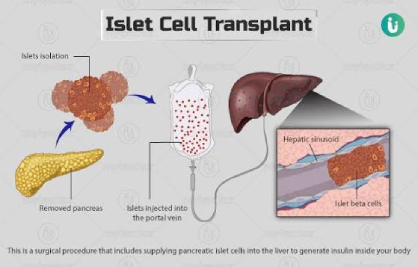
Pancreas or Islet Cell Transplant in India
Cost from$25,000 – $45,000 In hospital14-21 days (whole organ pancreas transplant); 2-3 days (isle Stay in India5-6 weeks (whole organ transplant, including pre-op workup and post-op recovery) Success80-85% (1-year graft survival for pancreas transplant); islet cell transplant insulin independence rates are lower and m Procedure time4-6 hours (whole organ pancreas transplant surgery); 1-2 hours (islet cell infusion) AnaesthesiaGeneral (whole organ transplant); local/sedation (islet cell infusion, done via catheter into the liver) Opinion in24 hours

The short answer

Pancreas or islet cell transplant in India costs USD 25,000–45,000, including surgery, hospital stay, and immediate post-transplant care. Whole organ pancreas transplant is major surgery requiring 2-3 weeks of hospitalization, often combined with a kidney transplant for patients with Type 1 diabetes and kidney failure; islet cell transplant is a less invasive, infusion-based alternative available at select centers.

About Pancreas or Islet Cell Transplant

Pancreas transplantation replaces a non-functioning pancreas with a healthy donor organ, restoring the body's ability to produce insulin naturally. It is most often performed for patients with Type 1 diabetes, frequently combined with a kidney transplant (SPK) when kidney failure is also present. Islet cell transplantation is a less invasive alternative in which insulin-producing islet cells are extracted from a donor pancreas and infused into the patient's liver via a catheter, avoiding major surgery.

Who it is for

Recommended for patients with Type 1 diabetes experiencing severe hypoglycemia unawareness, brittle glucose control despite optimal insulin therapy, or diabetic kidney failure requiring a combined pancreas-kidney transplant.

What happens during treatment

A multidisciplinary transplant team evaluates donor-recipient compatibility, performs the transplant surgery or islet infusion, and manages lifelong immunosuppression to prevent organ rejection. Recovery includes close monitoring of blood glucose, kidney function (if applicable), and signs of rejection.

Why patients choose India for this

Experienced transplant centers

High-volume transplant programs with multidisciplinary teams experienced in pancreas and combined pancreas-kidney surgery

Comprehensive post-transplant care

Structured immunosuppression protocols, infection monitoring, and rejection surveillance included in the care pathway

Significant cost advantage

Total cost including surgery and hospital stay is a fraction of equivalent transplant programs in the US or UK

Shorter waiting periods

Streamlined evaluation and donor-matching processes compared to long waitlists in some Western transplant systems

Pancreas or Islet Cell Transplant cost

CountryIndicative cost
India — with Nobel Medi Assistance $25,000 – $45,000
United States$150,000 - $300,000
United Kingdom£80,000 - £120,000
UAE$100,000 - $150,000

Figures are indicative for international patients and depend on the hospital, the surgeon and your reports. Your exact cost is confirmed in writing after a specialist review — free, and with no obligation.

What the estimate covers

Included

  • Pre-transplant evaluation and compatibility testing
  • Transplant surgery (or islet infusion) and surgical team fees
  • Hospital stay including ICU care
  • Initial immunosuppressive medication
  • Post-operative monitoring during hospital stay

Not included

  • Donor organ/islet sourcing costs (where applicable, subject to local transplant regulations)
  • Long-term immunosuppressive medication after discharge
  • Travel and accommodation
  • Extended follow-up visits and lab monitoring after return home
  • Treatment for any post-transplant complications

How Pancreas or Islet Cell Transplant is done

  1. Evaluation and workupTransplant team assesses diabetes severity, kidney function, cardiovascular health, and donor compatibility
  2. Donor matchingSuitable donor organ or islet cells identified based on blood type and tissue compatibility
  3. Transplant surgery or infusionPancreas surgically implanted (with or without simultaneous kidney transplant), or islet cells infused into the liver via catheter
  4. Immediate post-operative careClose ICU/ward monitoring of blood glucose, graft function, and early signs of rejection
  5. Immunosuppression initiationMedication regimen started to prevent organ rejection, with dosing adjusted based on response

Recovery and what to expect

  • First 48-72 hoursICU monitoring, blood glucose stabilization, pain management
  • Week 1-2Gradual mobilization, immunosuppression titration, monitoring for rejection or infection
  • Week 3-4Discharge planning, patient education on lifelong medication and diet
  • Month 2-3Return-home follow-up, regular blood tests to monitor graft function and drug levels

Specialists who perform this

Where it is done

Frequently asked questions

What is the difference between pancreas transplant and islet cell transplant?
A whole organ pancreas transplant is major surgery replacing the entire organ, while islet cell transplant is a less invasive procedure where only insulin-producing cells are infused into the liver.
Will I still need insulin after a pancreas transplant?
Most successful whole organ transplants achieve insulin independence; islet cell transplant outcomes vary and some patients may still need reduced insulin doses.
Why is pancreas transplant often combined with kidney transplant?
Many Type 1 diabetes patients develop kidney failure from long-term diabetes; a combined SPK transplant addresses both organs in one surgery using organs from the same donor.
How long will I need to take immunosuppressive medication?
Lifelong — immunosuppression is required for as long as the transplanted organ or cells remain functional, to prevent rejection.
What are the risks of pancreas transplant?
Risks include surgical complications, organ rejection, infection due to immunosuppression, and blood clots; the transplant team monitors closely for these post-surgery.
How is a donor pancreas or islet cells sourced?
Sourcing follows India's organ transplant regulations, including donor registration and matching protocols; specifics should be discussed directly with the transplant center.
How soon can I return home after the transplant?
Typically after 4-6 weeks, once the transplant team confirms graft stability and the patient is medically fit to travel.
Is islet cell transplant widely available in India?
It's offered at a limited number of specialized centers; whole organ pancreas transplant is more widely available.

What would your Pancreas or Islet Cell Transplant cost?

Send your reports and a senior specialist sends back a written plan with costs within 24 hours. Free, with no obligation.