
Robotic Hernia Surgery in India
Also known as robot-assisted hernia repair, robotic inguinal hernia repair, robotic ventral hernia repair, robotic hernia mesh surgery
The short answer
Robotic hernia surgery in India costs between USD 2,800 and USD 5,000 for international patients, somewhat more than standard laparoscopic hernia repair given the robotic system involved. The hernia is repaired and reinforced with mesh through small incisions using robot-assisted instruments, generally recommended for recurrent hernias, bilateral (both-sided) hernias, or larger ventral hernias where the added precision genuinely helps. Success rates run around 98 percent, similar to laparoscopic repair, with the main advantage being suited to more complex cases rather than a dramatically higher cure rate for simple ones.
About Robotic Hernia Surgery
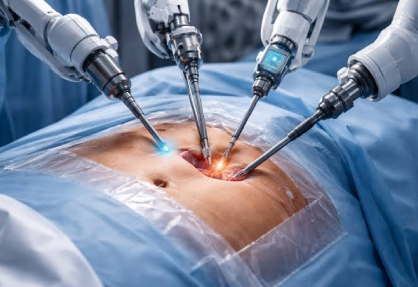
Robotic hernia surgery repairs a hernia, a weakness or gap in the abdominal wall through which tissue pushes through, and reinforces the area with a synthetic mesh. Using the da Vinci surgical system, the surgeon works through several small incisions with a magnified 3D view and finer instrument control than standard laparoscopy, which is particularly useful for recurrent hernias, hernias on both sides, or larger ventral hernias where precise mesh placement matters more.
Procedures Available
Robotic inguinal hernia repair treats groin hernias, often bilaterally in a single operation, using the robotic system's dexterity to navigate the tight pelvic space. Robotic ventral or umbilical hernia repair treats hernias in the abdominal wall itself, with the robotic approach offering more precise mesh placement and closure for larger defects than standard laparoscopy allows. For a straightforward, first-time, single-sided inguinal hernia, standard laparoscopic repair typically achieves comparable outcomes to the robotic approach at a lower cost.
Cost
The estimate covers pre-operative evaluation, the robotic surgery, mesh, anaesthesia, and hospital stay through discharge. The robotic approach adds roughly USD 500 to USD 1,500 over standard laparoscopic repair, with the exact difference depending on hernia complexity and whether bilateral repair is performed in the same session.
How Long the Trip Takes
Most patients plan for 6 to 8 days in India, covering pre-op evaluation, 1 to 2 days in hospital after surgery, and a short recovery period before flying home.
Choosing a Hospital
Ask directly whether robotic surgery offers a genuine advantage for your specific hernia type and complexity, since for a straightforward first-time hernia, standard laparoscopic repair often serves just as well. The robotic approach is most worth its added cost for recurrent, bilateral, or larger ventral hernias.
Robotic Hernia Surgery cost
| Country | Indicative cost |
|---|---|
| India — with Nobel Medi Assistance | $2,500 – $5,500 |
Figures are indicative for international patients and depend on the hospital, the surgeon and your reports. Your exact cost is confirmed in writing after a specialist review — free, and with no obligation.
What the estimate covers
Included
- Pre-operative consultation and imaging
- Surgeon and anaesthesia fees
- Robotic surgical system usage
- The mesh material
- Operation theatre charges
- Hospital stay through discharge
Not included
- Flights and visa fees
- Accommodation outside the hospital
- Additional mesh cost, if a bilateral or larger repair requires more material
- Conversion to open surgery fee, if required intraoperatively
- Treatment for a pre-existing condition unrelated to the hernia
- Extended hospital stay if complications arise
Specialists who perform this



Where it is done

What would your Robotic Hernia Surgery cost?
Send your reports and a senior specialist sends back a written plan with costs within 24 hours. Free, with no obligation.