24/7 patient support Free consultation →

AV Fistula in India

Also known as Arteriovenous fistula, AVF creation, dialysis access surgery, Brescia-Cimino fistula, vascular access for dialysis
AV Fistula in India
Cost from$800 – $1,800 In hospital0-1 day (day-care or overnight observation) Stay in India3-5 days Success85-90% (primary fistula maturation and functional patency) Procedure time1-2 hours AnaesthesiaLocal (occasionally regional block for complex cases) Opinion in24 hours

The short answer

AV fistula surgery in India costs USD 800–1,800 and creates a durable vascular access point for hemodialysis by surgically connecting an artery and vein, usually in the arm. It's typically a day-care or overnight procedure under local anaesthesia, with the fistula needing 6-8 weeks to mature before it can be used for dialysis.

About AV Fistula

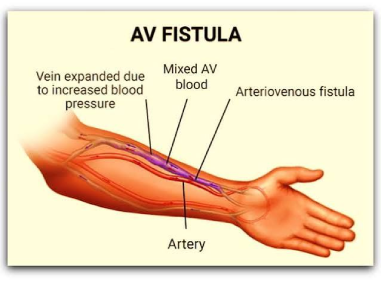
An arteriovenous (AV) fistula is created by surgically joining an artery and a vein, most commonly in the forearm or upper arm, to form a durable, high-flow vessel suitable for repeated needle access during hemodialysis. It is considered the gold-standard vascular access for long-term hemodialysis due to its durability and lower complication rates compared to catheters or grafts.

Who it is for

Recommended for patients with chronic kidney disease approaching the need for hemodialysis, ideally created well before dialysis is required to allow time for the fistula to mature.

What happens during treatment

A vascular surgeon selects a suitable artery and vein based on pre-operative vein mapping, then surgically connects them under local anaesthesia. Over the following weeks, increased blood flow causes the vein to thicken and enlarge ("mature"), becoming ready for repeated dialysis needle punctures.

Why patients choose India for this

Experienced vascular surgeons

High-volume experience creating and revising AV fistulas across a wide range of vessel conditions

Pre-operative vein mapping

Ultrasound vein mapping available to select the optimal vessel site, improving maturation success rates

Low-cost, high-quality access surgery

Total cost is a fraction of equivalent procedures in Western countries, without compromising surgical standards

Integrated dialysis care pathway

Easy coordination between vascular surgery and nephrology teams for patients preparing for or already on dialysis

AV Fistula cost

CountryIndicative cost
India — with Nobel Medi Assistance $800 – $1,800
United States$8,000 - $15,000
United Kingdom£200 - £350 per session
UAE$150 - $250 per session

Figures are indicative for international patients and depend on the hospital, the surgeon and your reports. Your exact cost is confirmed in writing after a specialist review — free, and with no obligation.

What the estimate covers

Included

  • Dialysis session (machine time, dialyzer, consumables)
  • Nursing and technician supervision
  • Basic vital monitoring during session

Not included

  • Nephrologist consultation fees
  • Vascular access creation (fistula/graft/catheter placement) if needed
  • Medications (e.g., erythropoietin, phosphate binders)
  • Travel and accommodation
  • Long-term lab monitoring and follow-up visits

How AV Fistula is done

  1. Nephrology assessmentNephrologist evaluates kidney function, fluid status, and overall health to confirm need and frequency of dialysis
  2. Vascular or peritoneal accessA fistula, graft, or catheter is created for hemodialysis, or a peritoneal catheter placed for peritoneal dialysis
  3. Dialysis sessionBlood is filtered through the dialysis machine (hemodialysis) or fluid exchanged in the abdomen (peritoneal dialysis)
  4. Monitoring during sessionVital signs, blood pressure, and fluid removal are monitored throughout
  5. Post-session reviewNephrologist reviews response and adjusts the dialysis prescription as needed over subsequent sessions

Recovery and what to expect

  • After each sessionMild fatigue or lightheadedness is common; most patients resume normal activity within hours
  • First 1-2 weeksAccess site (fistula/catheter) heals; dialysis schedule is fine-tuned based on lab results
  • OngoingRegular sessions continue indefinitely (2-3 times/week for hemodialysis, daily for peritoneal dialysis) unless a transplant becomes available

Specialists who perform this

Where it is done

Frequently asked questions

How often will I need dialysis?
Most hemodialysis patients need sessions 2-3 times a week; peritoneal dialysis is typically done daily at home.
Is dialysis a permanent treatment?
For chronic kidney disease, dialysis is usually ongoing unless the patient receives a kidney transplant; for acute kidney injury, it may be temporary until kidney function recovers.
What is the difference between hemodialysis and peritoneal dialysis?
Hemodialysis filters blood through a machine at a center, while peritoneal dialysis uses the lining of the abdomen to filter waste, often done at home.
Can international patients receive ongoing dialysis while traveling in India?
Yes — many centers offer short-term dialysis packages for patients visiting for other treatments or awaiting transplant evaluation.
Is dialysis painful?
The needle insertion for hemodialysis access causes brief discomfort; the session itself is generally painless, though some patients experience cramping or fatigue.
What diet restrictions come with dialysis?
Patients are typically advised to limit potassium, phosphorus, sodium, and fluid intake; a renal dietitian usually provides personalized guidance.
Can dialysis be combined with preparation for a kidney transplant?
Yes — many patients undergo dialysis while being evaluated for or awaiting a kidney transplant.
How is vascular access for hemodialysis created?
Typically through a minor surgical procedure to create a fistula or graft in the arm, or by placing a temporary catheter for urgent need.

What would your AV Fistula cost?

Send your reports and a senior specialist sends back a written plan with costs within 24 hours. Free, with no obligation.