24/7 patient support Free consultation →

Shoulder Replacement Surgery in India

Also known as Total shoulder replacement, reverse shoulder replacement, partial shoulder replacement, shoulder arthroplasty, shoulder joint replacement cost India
Shoulder Replacement Surgery in India
Cost from$5,500 – $9,500 In hospital3-5 days Stay in Indiaabout 2-3 weeks Success90-96% good to excellent outcomes at 10 years Procedure time1.5-3 hours AnaesthesiaGeneral Opinion in24 hours

The short answer

Shoulder replacement surgery in India costs between $5,500 and $9,500, against $50,000 to $80,000 in Western countries. The type, total, partial, or reverse shoulder replacement, depends on which parts of the joint are damaged and whether the rotator cuff is intact, and is generally recommended once pain and stiffness no longer respond to medication or physiotherapy.

About Shoulder Replacement Surgery

Shoulder replacement surgery treats severe shoulder pain and stiffness, most often caused by osteoarthritis, rheumatoid arthritis, rotator cuff damage, or a previous fracture, when the joint no longer responds to medication, injections, or physiotherapy. The shoulder is a ball-and-socket joint, and surgery replaces the damaged surfaces with prosthetic components to relieve pain and restore movement.

Choosing the type of replacement

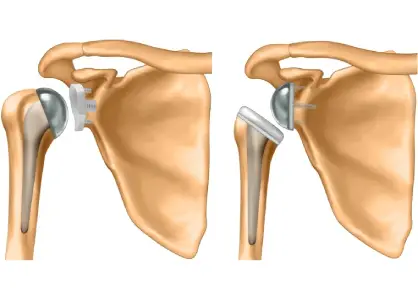
In a total shoulder replacement, both the ball (humeral head) and socket (glenoid) are replaced, and works well for patients with an intact, healthy rotator cuff. A partial shoulder replacement (hemiarthroplasty) replaces only the ball, keeping the natural socket, and is used when the socket itself is largely healthy. A reverse shoulder replacement switches the position of the ball and socket, the ball is fixed to the shoulder blade and the socket to the arm bone, allowing the deltoid muscle to power arm movement instead of a damaged rotator cuff. This makes it the preferred option for patients with significant rotator cuff tears or those who have had a previous replacement that failed.

What to expect from the outcome

Most patients experience significant pain relief and meaningfully improved range of motion. As with any joint replacement, the implant is a mechanical device with a working lifespan, current implants often perform well for 15-20 years or more, though this varies with activity level and individual factors, and a small proportion of patients eventually need revision surgery.

Why patients choose India for this

Save 85-90% on shoulder replacement surgery

The same total, partial, and reverse shoulder arthroplasty techniques used in leading Western orthopedic centres are available in India at a fraction of the cost.

High-volume shoulder replacement surgeons

Partner hospitals include surgeons performing hundreds of shoulder replacements annually, including complex reverse arthroplasty cases.

Choice of implant systems, including stemless designs

Where clinically suitable, newer implant options such as stemless total shoulder arthroplasty are available alongside standard implants.

Structured post-operative rehabilitation

A personalised physiotherapy plan is built into recovery, since regaining motion and strength after shoulder replacement depends heavily on consistent rehabilitation.

Shoulder Replacement Surgery cost

CountryIndicative cost
India — with Nobel Medi Assistance $5,500 – $9,500
United States$50,000 - $80,000
United Kingdom$25,000 - $40,000
UAE / Middle East$15,000 - $25,000
Singapore$18,000 - $30,000

Figures are indicative for international patients and depend on the hospital, the surgeon and your reports. Your exact cost is confirmed in writing after a specialist review — free, and with no obligation.

What the estimate covers

Included

  • Orthopedic surgeon and surgical team fees
  • Operation theatre, anaesthesia and the shoulder implant (standard prosthesis)
  • Hospital stay for the planned duration
  • Routine medicines during the hospital stay
  • Post-operative nursing and initial physiotherapy sessions
  • Pre-discharge imaging to confirm implant positioning

Not included

  • Diagnostic workup and imaging (X-ray/MRI/CT) done before arrival in India
  • Flights, visa and travel insurance for the patient and accompanying family
  • Accommodation once discharged from hospital
  • Premium or imported implant options, if chosen over the standard prosthesis
  • Extended physiotherapy and rehabilitation after the initial stay
  • Follow-up visits and imaging after returning home

How Shoulder Replacement Surgery is done

  1. Diagnosis and planningAn orthopedic surgeon reviews X-rays and MRI imaging to confirm the extent of joint damage, rotator cuff condition, and the right type of replacement.
  2. Pre-operative workupBlood tests, imaging, and anaesthesia clearance are completed to confirm fitness for surgery.
  3. AnaesthesiaThe patient is placed under general anaesthesia, often combined with a regional nerve block for post-operative pain control.
  4. Accessing the jointThe surgeon makes an incision at the front of the shoulder to access the damaged joint surfaces.
  5. Replacing the jointDamaged bone surfaces are removed and replaced with prosthetic components, arranged as a total, partial, or reverse configuration depending on the surgical plan.
  6. ClosureThe incision is closed and a sterile dressing and sling applied.
  7. Early mobilisationGentle movement and physiotherapy begin soon after surgery to support recovery of motion.
  8. Discharge and follow-up planThe patient goes home with a physiotherapy plan and a follow-up schedule to monitor healing and implant position.

Recovery and what to expect

  • First 24-48 hoursPain managed with medication and nerve block; gentle passive movement often begins with physiotherapy guidance.
  • Days 3-5Increasing use of the arm for light daily tasks; sling worn most of the time for support.
  • 3-5 daysDischarged from hospital once pain is manageable and early mobility goals are met.
  • 2-3 weeksContinued recovery at accommodation in India, with a follow-up visit and imaging before flying home.
  • 6-12 weeksSling use is gradually reduced, and physiotherapy progresses to strengthening exercises.
  • 3-6 monthsMost patients reach a good range of motion and return to normal daily activities, with full recovery and strength continuing to improve over this period.

Specialists who perform this

Where it is done

Frequently asked questions

How do I know which type of shoulder replacement I need?
This depends on the condition of your rotator cuff and the extent of joint damage, confirmed through imaging. Your surgeon will recommend total, partial, or reverse replacement based on your specific case.
How long will the implant last?
Modern shoulder implants often perform well for 15-20 years or more, though this varies by activity level and individual factors. A small proportion of patients eventually need revision surgery.
How much pain relief can I expect?
Most patients experience significant pain relief and meaningfully improved range of motion, though some stiffness may persist depending on pre-surgery condition and adherence to physiotherapy.
When can I use my arm normally again?
Light daily tasks often resume within a few weeks, with a sling worn initially for support. Full strength and range of motion typically develop over 3-6 months with consistent physiotherapy.
Is reverse shoulder replacement only for older patients?
It's most commonly used for patients with significant rotator cuff damage or a failed previous replacement, regardless of age, though it's more common in older patients where rotator cuff tears are more frequent.
How long is the hospital stay?
Typically 3-5 days, depending on recovery and the type of replacement performed.
Can a family member stay with me during the hospital stay?
Yes, our partner hospitals accommodate an accompanying family member, and our team assists with visa arrangements for this.

What would your Shoulder Replacement Surgery cost?

Send your reports and a senior specialist sends back a written plan with costs within 24 hours. Free, with no obligation.