
Thrombectomy in India
Also known as Blood clot removal surgery, mechanical thrombectomy, DVT thrombectomy, arterial thrombectomy, endovascular thrombectomy
The short answer
Thrombectomy in India costs between USD 1,500 and USD 8,000 for international patients, depending on whether the clot is in a vein or artery and whether a mechanical device or catheter-directed clot-dissolving approach is used. A quick note on timing: this page covers planned thrombectomy for conditions like deep vein thrombosis or peripheral arterial blockage. Emergency mechanical thrombectomy for acute stroke is a time-critical procedure done within hours of symptom onset at the nearest capable hospital, not something suited to advance international travel planning.
About Thrombectomy
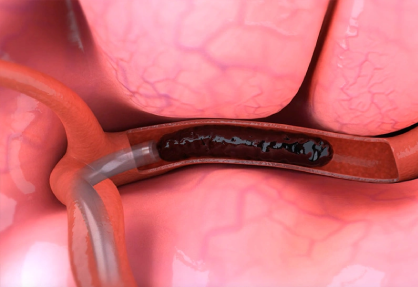
Thrombectomy removes a blood clot blocking a vein or artery, restoring normal blood flow. It is most commonly used for deep vein thrombosis (DVT) in the leg or pelvis, or for peripheral arterial occlusion threatening circulation to a limb. This page covers planned vascular thrombectomy; emergency mechanical thrombectomy for acute ischemic stroke is a distinct, time-critical procedure performed at the nearest stroke-capable hospital within hours of onset, and is not something to plan as international travel.
Procedures Available
Mechanical thrombectomy uses a catheter-based device to physically extract the clot, generally the fastest and most direct approach. Catheter-directed thrombolysis delivers clot-dissolving medication directly into the blockage through a catheter, sometimes combined with mechanical extraction in a pharmacomechanical approach. If underlying vein narrowing is found, angioplasty or stenting may be performed in the same session to prevent the clot from recurring.
Cost
The estimate depends on clot location and extent, the technique used, and whether additional procedures like stenting are needed in the same session. Mechanical thrombectomy is generally 20 to 30 percent more expensive than catheter-directed thrombolysis alone, given the specialised device involved, but often resolves the clot faster.
How Long the Trip Takes
Most patients plan for 7 to 14 days in India, covering pre-procedure imaging and evaluation, the procedure itself, a hospital stay for monitoring and anticoagulation management, and follow-up imaging to confirm blood flow has been restored before travelling home.
Choosing a Hospital
Choose a centre with a dedicated interventional radiology or vascular surgery team experienced in thrombectomy specifically, since technique and device choice affect both clot clearance and the risk of recurrence. Confirm what anticoagulation plan you will follow after discharge, since ongoing medication is essential to prevent the clot from reforming.
Thrombectomy cost
| Country | Indicative cost |
|---|---|
| India — with Nobel Medi Assistance | $400 – $1,200 |
Figures are indicative for international patients and depend on the hospital, the surgeon and your reports. Your exact cost is confirmed in writing after a specialist review — free, and with no obligation.
What the estimate covers
Included
- Pre-procedure imaging and evaluation
- Surgeon or interventional radiologist fees
- The thrombectomy device or thrombolysis medication used
- Anaesthesia or sedation
- Hospital stay for monitoring
- Follow-up imaging before discharge
Not included
- Flights and visa fees
- Accommodation outside the hospital
- Stenting or angioplasty fee, if performed for an underlying narrowing
- Long-term anticoagulant medication after discharge
- Treatment for a pre-existing condition unrelated to the clot
- Extended ICU stay if complications arise
Specialists who perform this

Dr Kumud Rai
Vascular & Endovascular Surgery 👑 44+ years
Dr C.P.S. Chauhan
Interventional Radiology / Vascular Surgery 👑 29+ years
Dr Himanshu Verma
Vascular & Endovascular Surgery 👑 17+ years
Dr Rakesh Mahajan
Vascular & Endovascular Surgery 👑 36+ years
Dr Nitish Anchal
Vascular & Endovascular Surgery 👑 18+ years
Dr Rajiv Parakh
Vascular & Endovascular Surgery 👑 40+ yearsWhere it is done

What would your Thrombectomy cost?
Send your reports and a senior specialist sends back a written plan with costs within 24 hours. Free, with no obligation.